
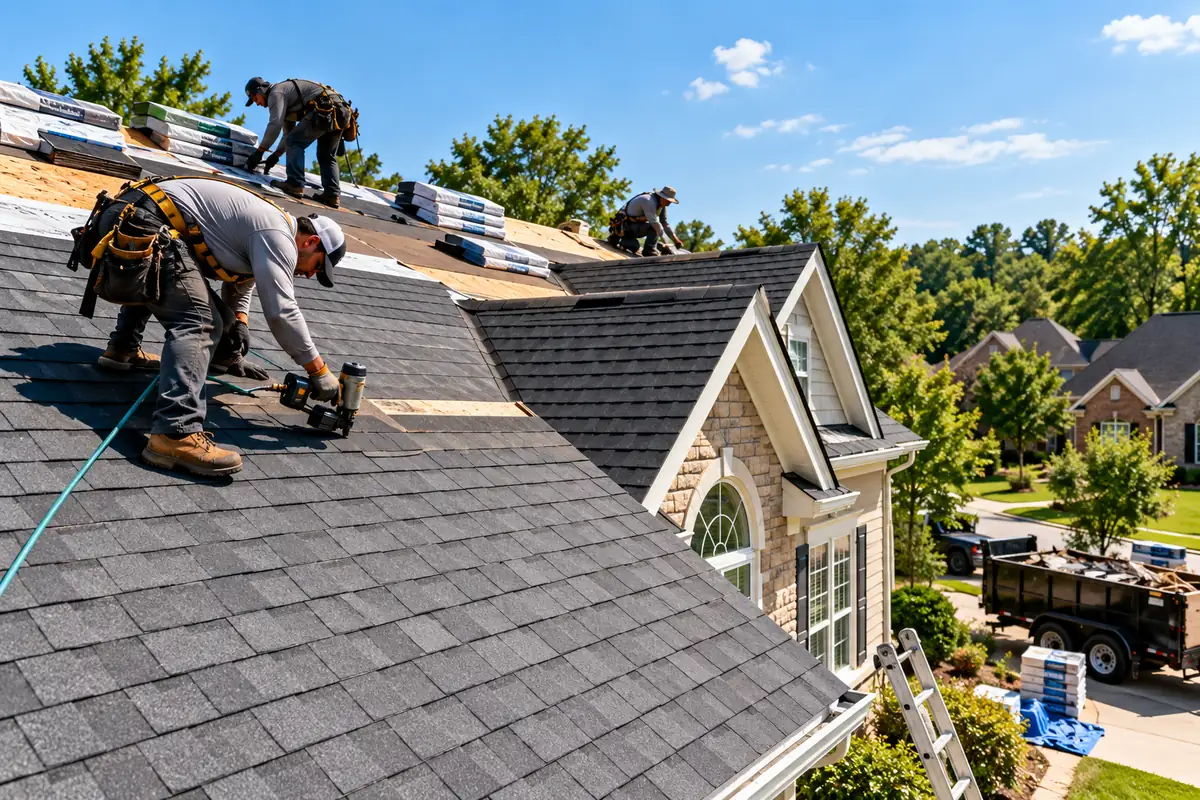
How Long Does a Roof Replacement Take in North Carolina? (2026 Guide)
If you're planning to replace your roof, one of your biggest concerns may be how long the project will take. Will you need to leave your home? Will the installation disrupt your work schedule? And what happens if it rains while your old roof is being removed?
Most straightforward residential asphalt-shingle roof replacements can be completed in approximately one to three working days once installation begins. However, larger homes, steep or complicated roofs, hidden damage, and weather delays can extend the project.
For homeowners in Greensboro, Winston-Salem, High Point, and surrounding communities, understanding the process can make planning easier.
At 5 Star Roofing & Restoration, our Piedmont Triad roofing services include residential roof inspections, repairs, and replacements. This guide explains the typical installation timeline, what happens during each stage, and how to prepare your property.
How Long Does It Usually Take to Replace a Roof?
The time required depends on the roof's size, complexity, materials, condition, and installation requirements.
For general planning, the following estimates may be useful.
Project typeIllustrative installation timeSmall, straightforward asphalt-shingle roofAround 1 working dayAverage residential asphalt-shingle roofApproximately 1–3 working daysLarge or complex asphalt-shingle roofApproximately 3–5 working days or longerMetal roofing installationSeveral days or longer, depending on systemRoof replacement requiring major decking or structural repairsAdditional time as required
These are general planning estimates, not guaranteed completion times. Your contractor should provide a project-specific schedule.
Importantly, the actual installation is only one part of the roof replacement process. Inspections, estimates, material ordering, permitting where required, and scheduling may occur days or weeks before installation begins.
What Happens During a Roof Replacement?
A roof replacement typically involves several stages, each of which contributes to the final installation timeline.
1. Initial Roof Inspection and Assessment
Before recommending replacement, the contractor should evaluate the condition of your existing roofing system.
The assessment may include:
- Inspecting shingles for deterioration or visible damage.
- Checking flashing around chimneys, vents, and skylights.
- Identifying potential leak sources.
- Reviewing accessible roof decking and attic conditions.
- Evaluating ventilation.
- Looking for signs of storm damage.
- Measuring the roof.
This inspection helps determine whether your roof requires replacement or whether targeted repairs may be appropriate.
If you're uncertain about replacing your roof, our guide on whether to repair or replace an asphalt-shingle roof explains the key differences.
2. Written Estimate and Material Selection
After the assessment, the contractor prepares a written proposal.
It should identify:
- Roofing materials and manufacturer.
- Existing roof removal.
- Underlayment and water-protection components.
- Flashing requirements.
- Starter shingles and ridge caps.
- Ventilation provisions.
- Decking repair allowances.
- Cleanup procedures.
- Warranty coverage.
- Payment terms.
Homeowners should review the scope carefully before approving the project.
Material availability and the contractor's schedule can influence the time between accepting the estimate and beginning installation.
3. Preparing the Property
Before installation day, the contractor should explain how to prepare your property.
Homeowners can help by:
- Moving vehicles away from the house.
- Clearing driveways and work areas.
- Relocating patio furniture.
- Protecting fragile landscaping where practical.
- Securing wall decorations that may be affected by vibration.
- Keeping pets and children away from construction zones.
- Confirming where materials and debris containers will be placed.
Preparing ahead of time can help reduce interruptions once work begins.
4. Removing the Existing Roofing Materials
For a complete tear-off replacement, the roofing crew removes the existing shingles and other materials included in the scope.
This exposes the roof deck so its condition can be evaluated.
The time required depends on:
- Roof size.
- Number of existing roofing layers.
- Roof pitch.
- Property access.
- Material disposal requirements.
- Existing roof conditions.
Removing multiple layers can require more labor than removing a single layer.
5. Inspecting and Repairing the Roof Deck
After the existing roof covering is removed, the contractor checks the underlying decking.
Damaged plywood or oriented strand board may need replacement before new roofing materials can be installed.
Potential problems include:
- Water-damaged decking.
- Deteriorated wood.
- Loose or unsuitable decking.
- Damage around roof penetrations.
- Other conditions affecting installation.
Some problems may not be visible during the initial inspection.
If unexpected repairs are necessary, your contractor should explain the findings and follow the agreed change-order procedure.
6. Installing the New Roofing System
Once the deck is prepared, installation of the new roofing system begins.
Depending on the selected system, this may include:
- Underlayment.
- Additional water-protection materials.
- Drip edge and other edge components.
- Starter shingles.
- Asphalt shingles or roofing panels.
- Flashing.
- Ridge caps.
- Ventilation components.
Installation must follow applicable requirements and manufacturer specifications.
A roofing system with multiple valleys, dormers, skylights, and penetrations generally requires more detailed work than a simple gable roof.
7. Cleanup and Final Inspection
After installation, the crew completes the agreed cleanup process.
This may involve:
- Removing discarded roofing materials.
- Collecting accessible debris.
- Using magnetic equipment to collect accessible nails.
- Checking visible installation details.
- Inspecting flashing and roof edges.
- Reviewing the completed work.
- Providing relevant warranty documentation.
Before the project is closed, homeowners should ask about any remaining items, required inspections, and warranty registration procedures.
What Factors Can Delay a Roof Replacement?
Even a well-planned roofing project can experience delays.
Weather Conditions
Rain, high winds, lightning, and other unsafe weather conditions can interrupt roofing work.
Roofing contractors should monitor the forecast and follow appropriate safety and installation requirements.
If rain is expected, the contractor may adjust the schedule rather than begin work that cannot be safely protected.
Roof Size and Pitch
Larger roofs require more materials and installation labor.
Steep roofs can also require additional fall protection and specialized working procedures.
Complex Roof Designs
Homes with complicated rooflines may require additional work around:
- Valleys.
- Dormers.
- Skylights.
- Chimneys.
- Plumbing vents.
- Roof-to-wall connections.
These areas require careful detailing to help manage water.
Hidden Decking Damage
Unexpected decking deterioration can delay installation while repairs are completed.
Ask your contractor how these discoveries are documented and approved.
Material Availability
Certain colors, products, metal roofing systems, or specialty components may have longer lead times.
Confirm availability before scheduling the installation.
Permits and Inspections
Permit and inspection requirements depend on the work and the jurisdiction.
If approvals are required, they may affect when work can begin or when the project can be closed out.
Can a Roof Be Replaced in One Day?
Yes. Some smaller or straightforward residential asphalt-shingle roofs can be replaced in one working day when conditions are favorable.
However, one-day installation should not be treated as a guarantee or the primary measure of quality.
A contractor must still allow sufficient time for:
- Safe removal of existing materials.
- Roof deck evaluation.
- Necessary repairs.
- Proper installation.
- Flashing details.
- Cleanup.
- Final inspection.
A carefully installed roof that takes two or three days is preferable to a rushed installation that overlooks important details.
Can You Stay Home During a Roof Replacement?
In many cases, homeowners can remain inside their houses while roofing work is underway.
However, the installation can be noisy.
You may hear:
- Hammering and nail guns.
- Roofing materials being moved.
- Workers walking on the roof.
- Equipment and vehicles.
- Debris entering disposal containers.
If you work from home, consider arranging important meetings away from the property during the loudest work periods.
Children and pets should remain away from active construction areas.
Follow the contractor's instructions regarding outdoor access and restricted areas.
What Happens If It Rains During Roof Replacement?
Rain can be a major concern when the existing roof covering has been removed.
A roofing contractor should plan the work around weather conditions and use appropriate temporary protection when needed.
However, temporary coverings are not a substitute for a completed roofing system, and weather-related risks cannot be eliminated entirely.
Before installation begins, ask:
- How is the weather forecast evaluated?
- What happens if rain develops unexpectedly?
- How will exposed areas be protected?
- Who should you contact if water enters the home?
- How are weather delays communicated?
- When will work resume?
Clear communication is especially important during North Carolina's thunderstorm season.
Does Roof Replacement Take Longer in Winter?
Roof replacement may be possible during suitable winter conditions, but lower temperatures, precipitation, and product-specific requirements can affect scheduling.
Some roofing materials have installation considerations related to temperature or sealing.
Contractors should follow the manufacturer's instructions and avoid unsafe working conditions.
During winter, possible delays include:
- Freezing rain.
- Snow or ice.
- Wet roofing surfaces.
- High winds.
- Temperature-related installation limitations.
A professional contractor should determine whether conditions are appropriate for the selected roofing system.
For related seasonal information, read our Piedmont Triad winter storm roof damage guide.
Roof Replacement Timelines in Greensboro, Winston-Salem, and High Point
The basic replacement process is similar throughout the Piedmont Triad, but property conditions and local requirements can affect the schedule.
Greensboro Roof Replacement
Greensboro has a mix of older residential neighborhoods, newer subdivisions, and homes with varying roof designs.
Complex rooflines, aging decking, and difficult property access can influence installation time.
Homeowners planning a project can explore our Greensboro roofing services for information about roof inspections, repairs, and replacements.
Winston-Salem Roof Replacement
Winston-Salem homeowners may encounter older roof systems, complicated flashing details, and existing ventilation conditions that warrant attention during replacement.
The time required depends on the property's actual roof design and condition.
Our Winston-Salem roofing services include residential roof assessments, repairs, and replacements.
High Point Roof Replacement
High Point homes range from straightforward residential roof designs to larger properties with steep slopes and multiple roof intersections.
Existing roof condition, weather, and installation complexity influence the project timeline.
Visit our High Point roofing services for information about local roof replacement options.
What About Other Piedmont Triad Communities?
Homeowners in Kernersville, Jamestown, Summerfield, Oak Ridge, and nearby communities should also consider property access, roof design, and applicable local requirements when planning replacement.
A contractor should evaluate the specific property rather than promise the same timeline for every home.
How to Avoid Unnecessary Roof Replacement Delays
While some delays are unavoidable, homeowners can take steps to make the process smoother.
Before Signing the Contract
- Request a detailed written estimate.
- Confirm the selected roofing materials.
- Ask about material availability.
- Review payment terms.
- Discuss possible decking repairs.
- Confirm permit responsibilities.
- Ask about the expected installation duration.
- Review the contractor's weather-delay procedures.
Before Installation Begins
- Confirm the installation date.
- Move vehicles and outdoor belongings.
- Clear necessary access areas.
- Make arrangements for pets and children.
- Protect fragile interior decorations.
- Discuss landscaping protection.
- Confirm where roofing materials will be delivered.
During the Project
- Stay clear of active construction areas.
- Communicate questions to the project supervisor.
- Review any unexpected repair findings.
- Approve changes according to the contract.
- Ask for updates if the schedule changes.
After Installation
- Review the finished project.
- Confirm cleanup is complete.
- Ask about any remaining work.
- Obtain warranty documents.
- Retain the final invoice.
- Confirm required inspections are completed.
Does a Faster Roof Replacement Mean Better Quality?
Not necessarily.
Installation speed depends on many factors, including crew size, equipment, roof design, and weather.
A larger crew may complete a straightforward project more quickly, but speed alone does not demonstrate installation quality.
When evaluating contractors, focus on:
- Installation procedures.
- Roofing system specifications.
- Crew supervision.
- Safety practices.
- Flashing details.
- Manufacturer requirements.
- Warranty coverage.
- Cleanup and inspection procedures.
The objective should be a properly installed roofing system, not simply the shortest installation time.
How Much Should You Budget for Roof Replacement?
Project duration and project cost are related, but not identical.
A complicated roof may require more labor, yet roofing material selection, roof size, decking condition, and other factors can have an even greater effect on the final price.
For preliminary budgeting, some homeowners consider broad asphalt-shingle roof replacement ranges of approximately $8,000–$22,000, with larger or more complicated projects potentially costing more.
This is an illustrative range, not a verified North Carolina average or a quote.
For a more detailed breakdown, read our North Carolina roof replacement cost guide.
The most reliable estimate comes from a professional roof assessment and written project scope.
Frequently Asked Questions About Roof Replacement Timelines
How many days does it take to replace a roof?
Many straightforward residential asphalt-shingle replacements can be completed in approximately one to three working days after installation begins. Larger or more complicated projects may require additional time.
Can roof replacement be completed in one day?
Yes, some smaller and straightforward roofs can be replaced in one working day. However, installation quality, safety, and proper roofing procedures should take priority over speed.
How long does it take to remove old shingles?
The time depends on roof size, slope, number of existing layers, access, and crew requirements. Removal may take part of a day or longer, depending on the project.
Can I live in my house while the roof is being replaced?
In many cases, yes. Expect significant noise and temporary restrictions around outdoor work areas. Keep children and pets away from construction zones.
What happens if rain delays roof replacement?
The contractor may reschedule or temporarily pause work. Ask how exposed areas will be protected and how weather-related schedule changes will be communicated.
Does metal roofing take longer to install?
Metal roofing can require additional time depending on the panel system, roof complexity, flashing details, and installation specifications. The contractor should provide a project-specific schedule.
How long does it take to replace a roof after storm damage?
The timeline depends on the extent of damage, material availability, contractor scheduling, weather, and any required repairs or insurance-related steps.
Should I schedule roof replacement before selling my home?
If the roof has significant defects, replacement may be worth evaluating before listing. However, the decision depends on the roof's condition, expected cost, local market conditions, and buyer expectations.
Why Choose 5 Star Roofing & Restoration?
5 Star Roofing & Restoration serves homeowners throughout Greensboro, Winston-Salem, High Point, and surrounding Piedmont Triad communities.
As a GAF Master Elite® roofing contractor, our team provides:
- Residential roof inspections.
- Roof repair.
- Complete roof replacement.
- Asphalt-shingle roofing.
- Metal roofing options.
- Storm-damage assessments.
- Roofing system and warranty guidance.
- Financing information for qualified homeowners.
Our goal is to help homeowners understand their roofing options, receive clear project information, and make decisions based on the actual condition of their homes.
Schedule Your Roof Inspection in North Carolina
If you're considering a roof replacement, the first step is understanding the condition of your existing roofing system.
A professional inspection can help determine whether repair or replacement is appropriate and what factors may influence your installation timeline.
Call 5 Star Roofing & Restoration at (336) 780-7800 to discuss your roofing needs and request an inspection and estimate.
Whether you're dealing with an aging roof, recurring leaks, or storm damage, our team can help you understand your next steps.
Timeline and pricing disclaimer: The installation durations and cost ranges in this article are general planning estimates, not guaranteed project timelines or prices. Actual requirements depend on roof design, existing conditions, materials, weather, and the agreed scope of work.
Fill out our quick contact form to get a free estimate from one of our Roofers

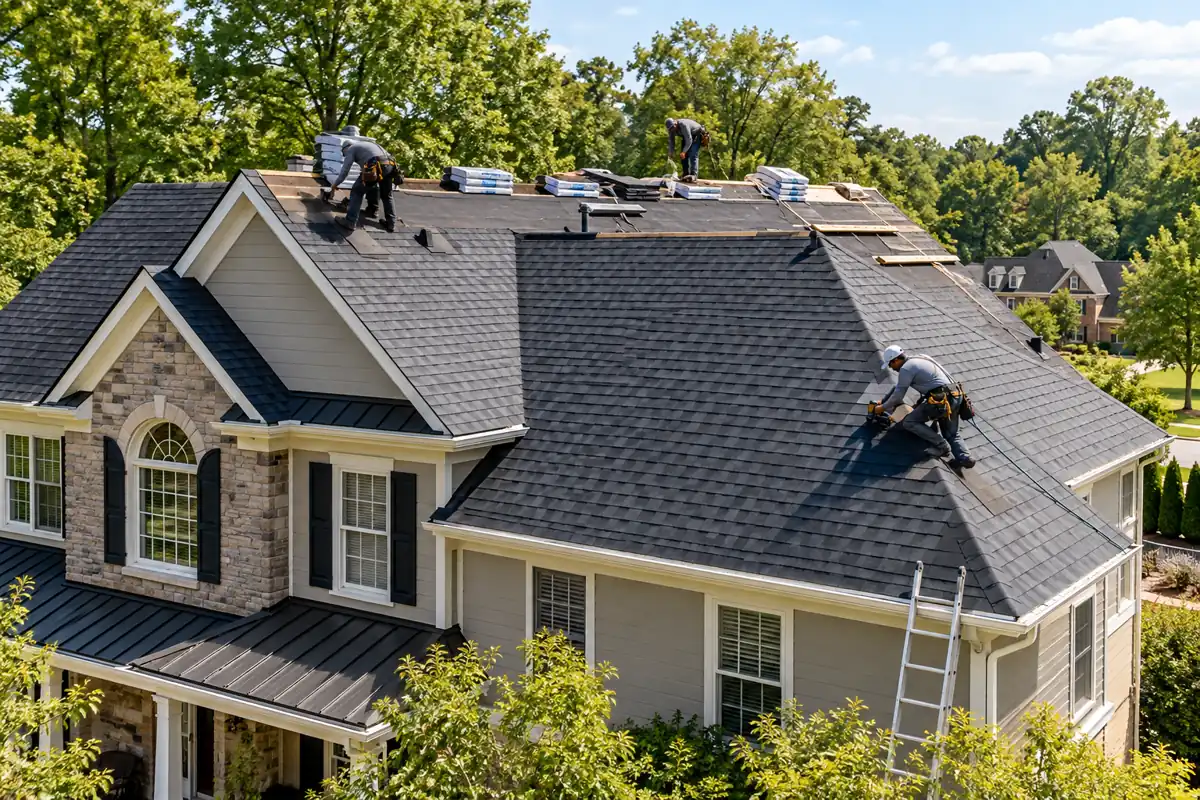
Contact us today for a free estimate, and let us show you why we're the preferred choice for homeowners and businesses alike. We're a family-owned local roofing company.
Top Roof Repair & Replacement Greensboro
Whether you're in need of a roof repair, full shingle roof replacement in Greensboro, or a completely new roof in Greensboro NC, our expert team is ready to deliver high-quality results with unmatched professionalism.We also specialize in insurance roof replacement in Greensboro, helping homeowners navigate the claims process after storm or hail damage with ease. If you've experienced wind or storm damage and need roof repair in Greensboro, we’re here to respond quickly and protect your home from further harm.Our services extend beyond traditional repairs to include metal roofing, commercial roofing, and complete residential roofing solutions — ensuring we have the right system for every customer and every roof type.

Metal Roofing
We specialize in installing GAF Timbersteel metal roofs: a stylish and energy efficient choice.

Roof Repair
We repair roof damage and roof leaks, execute roof replacements, and ensure that every square foot of your roof is in top condition.

Roof Replacement
Roof replacement is crucial not just for structural integrity but for a home's overall value.

Roof Inspection
We review both the interior and exterior components of the roof to identify potential issues.

Roof Rejuvenation
We methodically clean all roof types to improve curb appeal and avoid potential issues with this valuable preventative maintenance.

New Roof Installation
We take pride in installing cutting edge, long-lasting, and energy efficient roofs.