
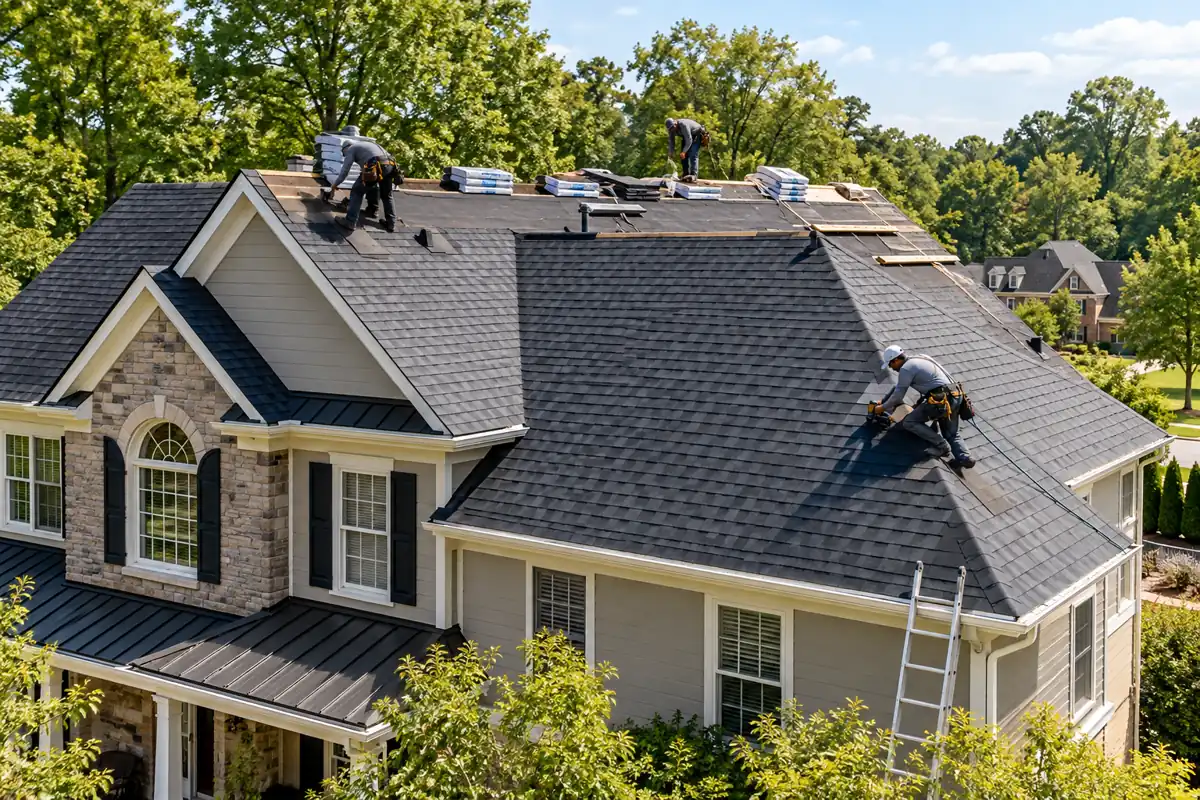
Roof Replacement in the Piedmont Triad: The Complete Homeowner Planning Guide (2026)
Replacing your roof is one of the most significant home improvement projects you'll undertake. Whether you live in Greensboro, Winston-Salem, High Point, or a surrounding Piedmont Triad community, understanding the roof replacement process can help you make informed decisions, avoid unnecessary expenses, and protect your home for years to come.
But where should you start?
Should you repair your existing roof or replace it? Which roofing material works best for North Carolina's climate? How long does installation take? What should a roofing estimate include? And how can you tell whether you're hiring the right contractor?
This guide answers those questions and walks you through the entire roof replacement process, from identifying warning signs to understanding warranties and preparing for installation.
If you're already considering a new roof, our Piedmont Triad roofing contractors can evaluate your existing roofing system and explain the available options.
Quick Answer: What Should Homeowners Know Before Replacing a Roof?
A successful roof replacement begins with a professional assessment of your existing roofing system, followed by a detailed written estimate, material selection, project scheduling, installation, and final inspection.
Before moving forward, homeowners should:
- Confirm whether a complete replacement is necessary.
- Understand the condition of the existing shingles, flashing, ventilation, and roof decking.
- Compare roofing materials based on cost, performance, and warranty coverage.
- Request a written estimate identifying the complete scope of work.
- Verify contractor credentials and insurance.
- Review financing options and payment terms.
- Confirm permit responsibilities and installation requirements.
- Prepare the property for construction.
- Review completed work and warranty documentation.
The goal isn't simply to install new shingles. It's to make sure the entire roofing system is appropriate for your home and properly installed.
How Do You Know When It's Time to Replace Your Roof?
Not every roof problem requires a complete replacement.
A small leak caused by damaged flashing or a few missing shingles may be repairable. However, widespread deterioration, repeated leaks, or extensive storm damage can make replacement the more practical long-term solution.
Warning Signs Your Roof May Need Replacement
Look for these common indicators:
- Shingles that are curling, cracking, or deteriorating across multiple areas.
- Widespread granule loss on asphalt shingles.
- Missing or damaged shingles following severe weather.
- Repeated leaks in different parts of the house.
- Interior ceiling stains or persistent attic moisture.
- Visible sagging or signs of structural problems.
- Extensive damage around roof valleys, chimneys, or penetrations.
- Repair costs that continue to accumulate without resolving the underlying problem.
These warning signs don't automatically mean you need a new roof. They indicate that a professional inspection may be appropriate.
Roof Age Matters, but Condition Matters More
Asphalt-shingle roofs can provide many years of service, but their actual lifespan depends on several factors:
- Roofing material and product specifications.
- Installation quality.
- Sun and weather exposure.
- Attic ventilation.
- Maintenance history.
- Storm damage.
- Roof design and drainage.
An older roof that's performing well may not need immediate replacement. Conversely, a relatively new roof with significant installation defects or storm damage may require substantial corrective work.
If you're uncertain, our guide on whether to repair or replace your asphalt shingle roof explains the decision in greater detail.
Roof Repair vs. Replacement: Which Is the Better Investment?
Homeowners often focus on the upfront cost of a repair compared with a complete replacement.
That's understandable, but the lowest immediate cost isn't always the most economical choice over time.
When Roof Repair Makes Sense
A targeted repair may be appropriate when:
- Damage is limited to a specific area.
- The surrounding roofing materials remain in serviceable condition.
- The leak source can be identified and corrected.
- Compatible replacement materials are available.
- The roof has meaningful remaining service life.
- There is no widespread underlying deterioration.
For example, replacing damaged flashing around a plumbing vent may resolve a leak without requiring a complete roof replacement.
When Roof Replacement Makes Sense
A complete replacement may be more appropriate when:
- Roofing materials are deteriorating throughout the roof.
- Multiple leaks have developed.
- Previous repairs have failed.
- Storm damage affects large portions of the roofing system.
- Major installation defects are widespread.
- Significant portions of the roof require corrective work.
- The cost of ongoing repairs is becoming excessive.
A qualified contractor should explain the findings and provide a recommendation based on the roof's actual condition.
Homeowner tip: Ask for photographs of the problem areas and a written explanation of why repair or replacement is recommended.
How Much Does Roof Replacement Cost in the Piedmont Triad?
Roof replacement costs vary substantially depending on the property.
For preliminary planning, some North Carolina homeowners may consider a broad budget of approximately $8,000 to $22,000 for an asphalt-shingle replacement, with larger or more complex projects costing more.
This is an illustrative budgeting range, not a statistically measured average of completed roofing projects in Greensboro, Winston-Salem, or High Point.
The final price depends on:
- Actual roof surface area.
- Roof pitch and complexity.
- Roofing material.
- Number of existing roofing layers.
- Roof decking condition.
- Flashing and ventilation requirements.
- Property access.
- Labor and disposal requirements.
- Warranty and roofing system specifications.
For additional cost details, read our 2026 North Carolina roof replacement pricing guide.
Why Two Similar Homes Can Have Different Roofing Costs
Imagine two homes with approximately 2,000 square feet of living space.
The first is a two-story home with a simple roofline. The second is a single-story home with a larger footprint, steep roof slopes, dormers, and several valleys.
Even though both homes have similar interior square footage, the second may require substantially more roofing materials and installation labor.
That's why professional roof measurements and an inspection are essential before making a financial decision.
What Is a Roofing Square?
Roofing contractors commonly measure roof surface area in squares.
One roofing square equals 100 square feet of roof surface.
For example:
- A 1,500-square-foot roof contains 15 roofing squares.
- A 2,000-square-foot roof contains 20 roofing squares.
- A 2,500-square-foot roof contains 25 roofing squares.
- A 3,000-square-foot roof contains 30 roofing squares.
These are roof measurements, not interior living-area measurements.
The contractor must also account for roof pitch, cuts, overlaps, and material waste.
Which Roofing Material Is Best for Piedmont Triad Homes?
Choosing the right roofing material involves balancing initial cost, appearance, expected performance, maintenance, and warranty coverage.
There isn't one material that's automatically best for every home.
Architectural Asphalt Shingles
Architectural asphalt shingles are a common residential roofing choice throughout North Carolina.
They offer a dimensional appearance and are available in many colors and product configurations.
Potential advantages include:
- Generally lower upfront costs than many premium roofing materials.
- Broad availability.
- A variety of colors and styles.
- Compatibility with many residential roof designs.
- Established installation methods.
- Multiple manufacturer warranty options.
For many homeowners, architectural shingles offer a practical combination of affordability and performance.
Impact-Resistant Asphalt Shingles
Certain shingles are designed and tested to resist impacts.
These products may be worth evaluating in areas where hail exposure is a concern.
However, impact resistance does not guarantee that a roof will survive every storm without damage.
Homeowners should review product ratings, warranty exclusions, and any potential insurance implications with their insurer.
Metal Roofing
Metal roofing is another option for homeowners planning a roof replacement.
Available systems differ in material, panel design, fastening method, coating, and appearance.
Potential advantages include:
- A distinctive appearance.
- Various product configurations and finishes.
- Long service-life potential with appropriate materials and installation.
- Different maintenance characteristics from asphalt shingles.
- Suitability for certain architectural styles.
Metal roofing generally has a higher upfront cost than many asphalt-shingle systems.
The decision should consider the complete installation cost and the home's specific requirements.
Which Material Should You Choose?
Ask your contractor to explain:
- Which products are appropriate for your roof pitch.
- How different materials handle local weather exposure.
- Expected maintenance requirements.
- Available colors and architectural styles.
- Manufacturer installation requirements.
- Warranty eligibility and limitations.
- The total installed cost.
The most expensive material isn't necessarily the best choice for every property.
How Piedmont Triad Weather Affects Roof Performance
Greensboro, Winston-Salem, and High Point experience a mix of summer heat, humidity, thunderstorms, heavy rainfall, occasional hail, and winter freezing conditions.
These environmental factors can affect roofing materials and influence maintenance needs.
Summer Heat and Sun Exposure
Prolonged exposure to sunlight and high temperatures contributes to the aging of many roofing materials.
Installation quality, product selection, and attic conditions can influence how well the roofing system performs.
Thunderstorms and High Winds
Strong winds can loosen or displace roofing materials.
Wind-driven rain may enter through damaged shingles, deteriorated flashing, or vulnerable roof intersections.
Following a significant storm, homeowners should inspect their property from the ground and arrange a professional evaluation when damage is suspected.
Hail Damage
Hail can damage certain roofing materials, vents, gutters, and other exterior components.
Some damage may not be obvious from the ground.
A professional assessment can help identify visible impact-related problems.
Winter Freezing Conditions
Although the Piedmont Triad generally experiences milder winters than many northern regions, freezing rain, ice, and occasional snow can still affect roofs.
Potential problems include:
- Ice accumulation.
- Blocked drainage.
- Damage from falling limbs.
- Wind-related shingle damage.
- Water intrusion during freeze-thaw conditions.
Our Piedmont Triad winter storm roof damage guide explains additional warning signs and preventive considerations.
What Happens During a Roof Replacement?
Understanding the installation process can help homeowners prepare and know what to expect.
While every project differs, many residential asphalt-shingle replacements follow a similar sequence.
Step 1: Initial Roof Inspection
The contractor evaluates the existing roof and identifies visible conditions that may affect the project.
An inspection may involve:
- Reviewing shingle condition.
- Checking flashing and roof penetrations.
- Identifying visible storm damage.
- Evaluating accessible attic conditions.
- Looking for signs of moisture intrusion.
- Reviewing ventilation.
- Identifying areas that may need additional attention.
The inspection helps determine whether replacement is necessary and informs the proposed scope of work.
Step 2: Roof Measurements and Written Estimate
After evaluating the property, the contractor measures the roof and prepares an estimate.
The proposal should explain:
- Roofing materials.
- Removal of existing roofing.
- Underlayment.
- Flashing.
- Starter shingles and ridge caps.
- Ventilation components.
- Decking repair provisions.
- Cleanup.
- Warranty coverage.
- Project cost.
- Payment schedule.
Ask questions about any items that are unclear or missing.
Step 3: Material Selection and Scheduling
Once the project scope is agreed upon, the homeowner selects the roofing materials and confirms scheduling.
Before installation, discuss:
- Shingle or metal roofing color.
- Product availability.
- Delivery location.
- Expected project duration.
- Property access.
- Weather-related scheduling changes.
- Protection of landscaping and outdoor features.
Your contractor should explain what happens if weather conditions delay the installation.
Step 4: Property Preparation
Roof replacement can be noisy and disruptive.
Homeowners should prepare their property before work begins.
Recommended preparations include:
- Move vehicles away from the house.
- Clear driveways needed for equipment and materials.
- Relocate patio furniture and outdoor decorations.
- Protect fragile landscaping where practical.
- Secure wall decorations that could be affected by vibration.
- Keep children and pets away from work areas.
- Inform household members about expected noise.
- Discuss special access needs with the contractor.
If you work from home, consider scheduling important calls or meetings away from the property during the loudest installation periods.
Step 5: Removal of Existing Roofing Materials
For a complete tear-off replacement, the crew removes the existing roofing materials.
This allows the underlying roof deck to be inspected.
Removing the old covering also provides an opportunity to address concealed conditions that could affect the new installation.
Step 6: Roof Deck Inspection and Repairs
The roof deck provides the structural surface supporting the roofing system.
Common decking materials include plywood and oriented strand board.
The contractor checks for conditions such as:
- Water damage.
- Deterioration.
- Loose or unsuitable decking.
- Damaged areas around roof penetrations.
- Other conditions affecting the installation.
If additional repairs are necessary, the contractor should explain the findings and follow the agreed change-order process.
Step 7: Installation of Roofing System Components
Once the deck is prepared, the roofing crew installs the required roofing components.
Depending on the selected system, these may include:
- Underlayment.
- Additional water-protection materials.
- Drip edge and other edge details.
- Starter shingles.
- Field shingles or roofing panels.
- Flashing.
- Ridge caps.
- Ventilation components.
The materials should be installed according to applicable building requirements and manufacturer specifications.
Step 8: Cleanup and Final Inspection
After installation, the crew removes debris and completes the agreed cleanup process.
A final review should address:
- Visible roofing installation.
- Flashing and roof details.
- Roof edges.
- Ventilation components.
- Accessible debris and discarded materials.
- Remaining project questions.
- Warranty documentation.
- Final payment and closeout requirements.
Ask for a copy of the completed project documentation for your records.
How Long Does Roof Replacement Take?
Many straightforward residential asphalt-shingle roof replacements can be completed in approximately one to three working days after installation begins.
However, this is a general planning estimate, not a guaranteed timeline.
Projects may take longer because of:
- Large roof size.
- Steep slopes.
- Complex rooflines.
- Weather delays.
- Multiple roofing layers.
- Hidden decking damage.
- Structural repairs.
- Material availability.
- Specialized installation requirements.
Metal roofing and other specialty systems may have different timelines.
Remember that the overall process—from inspection and proposal through scheduling and completion—can take longer than the installation itself.
What Hidden Problems Can Be Discovered During Roof Replacement?
Some roofing conditions cannot be fully identified until the existing materials are removed.
Homeowners should understand how unexpected findings will be handled before installation begins.
Damaged Roof Decking
Water intrusion or long-term deterioration can damage plywood or oriented strand board.
Affected decking may need replacement before the new roofing system can be installed.
Flashing Problems
Flashing around chimneys, skylights, walls, and roof penetrations may require replacement or correction.
Ventilation Deficiencies
The contractor may identify ventilation conditions that warrant further evaluation.
Structural Concerns
Occasionally, concealed structural problems may be discovered.
Significant structural issues may require additional assessment or specialized repairs.
How to Avoid Unexpected Billing Disputes
Before signing your roofing contract, ask:
- What repairs are included in the original estimate?
- What conditions could result in additional charges?
- How will unexpected problems be documented?
- Will photographs be provided?
- How are change orders approved?
- Is there a unit price for additional decking?
- What happens if substantial structural problems are found?
Clear answers help homeowners understand the financial risks before work begins.
Roof Replacement Planning in Greensboro, Winston-Salem, and High Point
Although the basic roof replacement process is similar throughout the Piedmont Triad, homeowners should consider their property's location, roof design, and applicable jurisdiction.
Greensboro Roof Replacement
Greensboro includes established residential neighborhoods, newer subdivisions, and homes with a wide variety of roof styles.
Some older properties may require additional attention to existing flashing, ventilation, or concealed roof conditions.
Homeowners can learn about inspections, roof repairs, storm damage, and replacement options through our Greensboro roofing services.
Winston-Salem Roof Replacement
Winston-Salem features a mix of older homes, established neighborhoods, and newer residential construction.
Depending on the property, roof replacement planning may involve evaluating complex rooflines, older roof decking, or existing ventilation arrangements.
Our Winston-Salem roofing services cover roof inspections, repairs, replacements, and storm-related roofing needs.
High Point Roof Replacement
High Point homeowners may encounter roofing concerns related to aging shingles, storm exposure, mature trees, and complex residential roof designs.
The appropriate solution depends on the home's condition rather than the neighborhood or age alone.
Explore our High Point roofing services for local inspections, roof repairs, and replacement options.
What About Surrounding Triad Communities?
Roof replacement planning is also relevant to homeowners in surrounding communities such as Kernersville, Jamestown, Summerfield, Oak Ridge, and other nearby areas.
The key is to confirm that your contractor serves the property and understands the applicable local requirements.
Important: A company's service area does not necessarily mean it maintains a physical office in every city it serves.
Do You Need a Permit for Roof Replacement in North Carolina?
Permit and inspection requirements depend on the type of work and the jurisdiction where the property is located.
Requirements may differ for straightforward roof-covering replacement, structural repairs, and projects involving changes to the roof structure.
Before installation, confirm:
- Whether a permit is required for the proposed scope.
- Who will obtain the permit.
- Whether inspections are necessary.
- Whether additional approvals apply to structural modifications.
- Whether your HOA has architectural requirements.
- Who is responsible for closing out any required permits.
Your roofing contractor should explain how these responsibilities will be handled.
Do not assume the rules are identical across every Piedmont Triad municipality.
How to Choose a Roofing Contractor in the Piedmont Triad
Roof replacement is a significant investment, and installation quality matters.
A qualified roofing contractor should be able to explain the proposed work, document its credentials, and answer your questions.
Questions to Ask Before Hiring
Consider asking:
- How long has the company been providing roofing services?
- Does it have relevant experience with homes like yours?
- Does it carry appropriate liability and workers' compensation insurance?
- Are applicable licensing and manufacturer credentials verifiable?
- Will it provide a detailed written estimate?
- What roofing materials are being proposed?
- How will existing roofing materials be removed?
- What happens if damaged decking is discovered?
- What warranty coverage is included?
- Who supervises the installation?
- What cleanup procedures are included?
- How are complaints or warranty concerns handled?
Avoid selecting a contractor solely because it offers the lowest price.
A more useful comparison considers the full scope of work, materials, installation requirements, and warranty terms.
Understanding Roofing Warranties
Roofing warranties can be confusing because different warranties cover different things.
Manufacturer Material Warranties
These generally address qualifying defects in roofing products, subject to the manufacturer's terms and exclusions.
Workmanship Warranties
These address certain installation-related problems according to the terms of the contractor's warranty.
Enhanced Manufacturer Roofing System Warranties
Some manufacturers offer enhanced warranty programs for eligible roofing systems installed by qualifying contractors.
Coverage may depend on:
- Contractor certification.
- Eligible product selection.
- Required system components.
- Installation requirements.
- Registration procedures.
- Specific warranty terms and exclusions.
5 Star Roofing & Restoration is a GAF Master Elite® contractor and can explain applicable GAF roofing system and warranty options.
Homeowner tip: Ask for the actual warranty documents. Review coverage periods, exclusions, transferability, and claim procedures rather than relying solely on advertised warranty durations.
Does Homeowners Insurance Cover Roof Replacement?
Homeowners insurance may cover roof damage caused by certain covered events.
Depending on the policy, these may include:
- Wind damage.
- Hail damage.
- Falling tree limbs.
- Certain sudden accidental events.
However, ordinary aging, deterioration, and deferred maintenance generally are not covered reasons for replacing a roof.
Coverage depends on the specific policy.
Before filing a claim, review:
- Covered causes of loss.
- Deductibles.
- Roof-related exclusions.
- Actual cash value versus replacement cost provisions.
- Applicable depreciation.
- Claim deadlines.
- Documentation requirements.
A roofing contractor can inspect the roof, document visible conditions, and prepare an estimate.
The insurance company determines coverage and payment under the policy.
Can You Finance a Roof Replacement?
A new roof can represent a substantial household expense.
Financing may help qualified homeowners manage the cost through scheduled payments.
Depending on the provider and eligibility requirements, options may include:
- Contractor-arranged financing.
- Personal loans.
- Home equity loans.
- Home equity lines of credit.
- Other eligible home improvement financing products.
Before selecting a financing plan, compare:
- Interest rate and APR.
- Loan duration.
- Monthly payment.
- Total repayment amount.
- Promotional financing conditions.
- Fees and penalties.
- Early repayment terms.
A lower monthly payment doesn't necessarily mean a lower total cost.
For additional information, explore our guide to roof financing solutions for homeowners.
All financing offers are subject to availability, approval, and current program terms.
How to Prepare Your Home for Roof Replacement
Preparing the property before installation can help the project run more smoothly.
Before Installation Day
Homeowners should:
- Confirm the project start date.
- Review the expected work schedule.
- Move vehicles away from the house.
- Clear access to the driveway and work areas.
- Relocate fragile outdoor items.
- Protect landscaping where practical.
- Secure valuable or fragile interior wall decorations.
- Keep pets away from construction areas.
- Make arrangements for anyone sensitive to loud noise.
- Confirm where materials and debris containers will be placed.
During Installation
For safety:
- Stay clear of active work zones.
- Keep children and pets indoors or away from the property.
- Do not walk beneath areas where materials are being removed.
- Avoid entering restricted work areas.
- Contact the project supervisor with questions.
- Follow the crew's safety instructions.
After Installation
Before considering the project complete:
- Review the finished work with the contractor.
- Ask about any remaining punch-list items.
- Confirm cleanup is complete.
- Obtain warranty documentation.
- Retain your contract and payment records.
- Ask how to report future concerns.
- Confirm any required inspections have been completed.
Keeping these documents organized can be useful for future maintenance, warranty questions, and property transactions.
Common Roof Replacement Mistakes to Avoid
Homeowners can reduce avoidable problems by recognizing common planning mistakes.
Choosing Only by Price
A low estimate may omit important roofing components or installation work.
Compare the complete scope, not just the total.
Ignoring Ventilation
Roofing materials and attic ventilation should be evaluated as parts of the overall system.
Failing to Discuss Decking Repairs
Concealed decking problems can increase project costs.
Ask about pricing and approval procedures in advance.
Not Reading Warranty Terms
Warranty coverage can vary significantly.
Review the actual documents before committing.
Overlooking Cleanup and Property Protection
Ask how the crew will protect landscaping, manage debris, and inspect the work area after installation.
Waiting Until Minor Problems Become Major
Small roofing problems don't always require immediate replacement, but unresolved leaks can lead to additional damage.
A timely inspection can help determine the appropriate response.
Frequently Asked Questions About Roof Replacement in the Piedmont Triad
How much does roof replacement cost in the Piedmont Triad?
A broad preliminary budgeting range for many asphalt-shingle roof replacements is approximately $8,000–$22,000, but actual prices can be higher or lower. This is not a verified regional average. Roof size, pitch, materials, and existing conditions determine the project cost.
How long does it take to replace a roof?
Many straightforward residential asphalt-shingle replacements can be completed in approximately one to three working days after installation begins. Complex projects, hidden damage, and weather delays may extend the timeline.
What is the best roofing material for North Carolina homes?
Architectural asphalt shingles are a common choice because of their cost and product availability. Metal roofing and other systems may also be appropriate. The best option depends on the home's design, budget, performance needs, and installation requirements.
Can I stay home during roof replacement?
Usually, homeowners can remain in the house during a standard roof replacement. However, the work can be loud, and outdoor areas may be temporarily restricted. Follow the contractor's safety guidance and consider alternative arrangements if household members are particularly sensitive to noise.
Do I have to replace my entire roof if only one section is damaged?
Not necessarily. Localized repairs or partial replacement may be possible depending on the damage, roofing materials, roof condition, and applicable requirements. A professional inspection can help determine the appropriate scope.
Does a new roof increase home value?
A new roof may improve curb appeal and reduce concerns about an aging roofing system. However, the effect on resale value varies with the property, local housing market, roof condition, and buyer preferences. A roof replacement should not be assumed to recover its entire cost at resale.
Can I replace my roof during winter?
Roof replacement may be possible during suitable winter weather, but temperature, precipitation, product requirements, and installation conditions can affect scheduling. Your contractor should follow the manufacturer's applicable installation instructions.
Does homeowners insurance pay for an old roof?
Insurance generally does not cover roof replacement solely because of age or ordinary deterioration. Coverage may apply when damage results from a covered event, depending on the policy.
What should I receive after my roof replacement is finished?
You should receive applicable project records, payment documentation, warranty information, and any other documents identified in your contract. Confirm that required inspections and agreed cleanup work have been completed.
Why Choose 5 Star Roofing & Restoration?
5 Star Roofing & Restoration serves homeowners throughout Greensboro, Winston-Salem, High Point, and surrounding Piedmont Triad communities.
As a GAF Master Elite® contractor, our team provides roofing services designed to help homeowners make informed decisions about protecting their properties.
Our services include:
- Residential roof inspections.
- Roof repairs.
- Complete roof replacement.
- Asphalt-shingle roofing.
- Metal roofing.
- Storm-damage assessments.
- Roofing system and warranty guidance.
- Financing information for qualified homeowners.
We understand that replacing a roof is a major investment.
Our goal is to help you understand the condition of your existing roof, evaluate appropriate options, and make a decision based on your home's actual needs.
Schedule Your Roof Inspection in the Piedmont Triad
If you're planning a roof replacement in Greensboro, Winston-Salem, High Point, or a surrounding community, the first step is understanding your existing roofing system.
A professional inspection can help identify visible damage, evaluate potential problem areas, and determine whether repair or replacement is appropriate.
Call 5 Star Roofing & Restoration at (336) 780-7800 to discuss your roofing needs and request an inspection and estimate.
Whether your roof is aging, leaking, or showing signs of storm damage, our team can help you understand your next steps.
Pricing and timeline disclaimer: Any cost ranges and installation durations in this guide are general planning estimates. They are not guaranteed prices or completion times. Actual project requirements depend on the property's condition, selected materials, weather, and written scope of work.
Fill out our quick contact form to get a free estimate from one of our Roofers

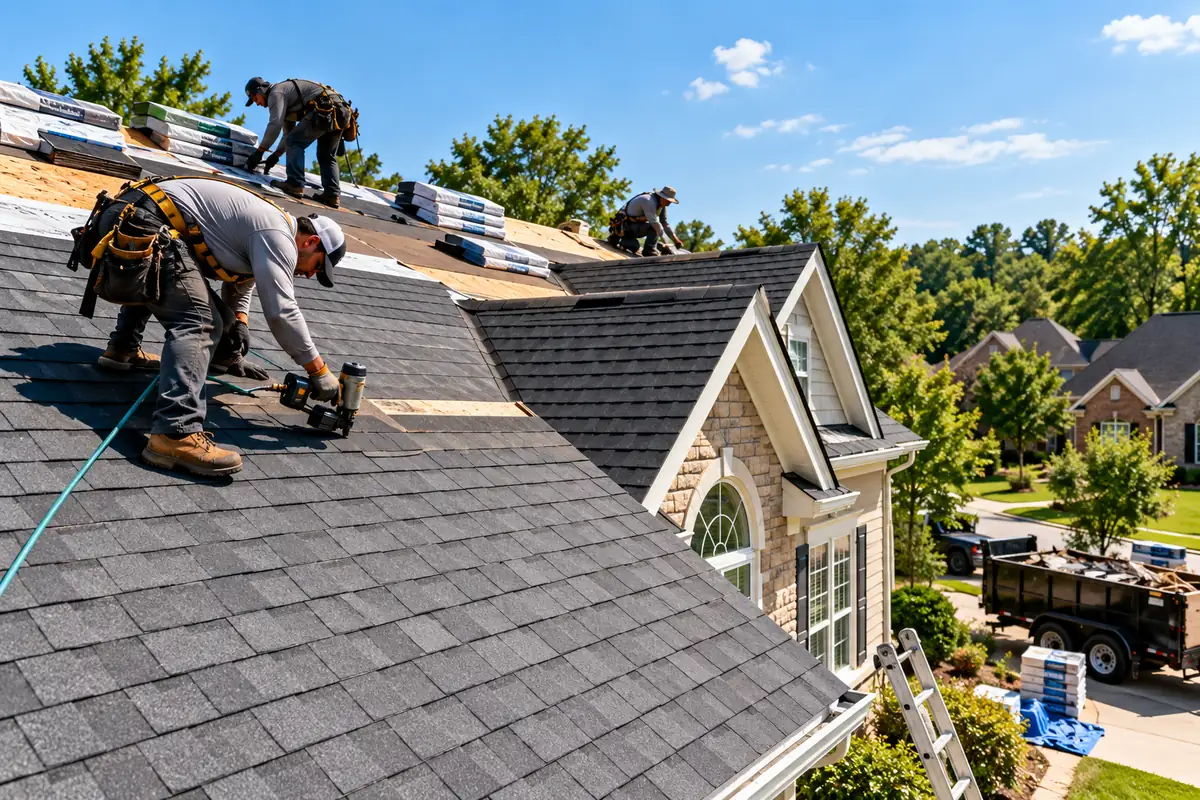
Contact us today for a free estimate, and let us show you why we're the preferred choice for homeowners and businesses alike. We're a family-owned local roofing company.
Top Roof Repair & Replacement Greensboro
Whether you're in need of a roof repair, full shingle roof replacement in Greensboro, or a completely new roof in Greensboro NC, our expert team is ready to deliver high-quality results with unmatched professionalism.We also specialize in insurance roof replacement in Greensboro, helping homeowners navigate the claims process after storm or hail damage with ease. If you've experienced wind or storm damage and need roof repair in Greensboro, we’re here to respond quickly and protect your home from further harm.Our services extend beyond traditional repairs to include metal roofing, commercial roofing, and complete residential roofing solutions — ensuring we have the right system for every customer and every roof type.

Metal Roofing
We specialize in installing GAF Timbersteel metal roofs: a stylish and energy efficient choice.

Roof Repair
We repair roof damage and roof leaks, execute roof replacements, and ensure that every square foot of your roof is in top condition.

Roof Replacement
Roof replacement is crucial not just for structural integrity but for a home's overall value.

Roof Inspection
We review both the interior and exterior components of the roof to identify potential issues.

Roof Rejuvenation
We methodically clean all roof types to improve curb appeal and avoid potential issues with this valuable preventative maintenance.

New Roof Installation
We take pride in installing cutting edge, long-lasting, and energy efficient roofs.