

Trees and Roof Damage: What Every Homeowner Should Do Immediately
Reading Time: 10–12 Minutes
A severe storm has passed, and as you step outside to inspect your property, you discover one of the worst sights a homeowner can experience—a large tree or heavy branch has fallen onto your roof.
Whether the damage appears minor or severe, it's important to respond carefully. A fallen tree can compromise your roof's structural integrity, create hidden water intrusion, damage electrical systems, and pose serious safety hazards if handled incorrectly.
Fortunately, knowing what to do immediately can help protect your family, minimize additional damage, and make the recovery process much smoother.
At 5 Star Roofing & Restoration, we've helped homeowners throughout Greensboro, Winston-Salem, High Point, Kernersville, Summerfield, Oak Ridge, Lewisville, Burlington, Jamestown, Clemmons, and surrounding North Carolina communities recover from storm-related tree damage. From small limbs scraping shingles to large trees collapsing through roofs, we've seen firsthand how acting quickly—and safely—can make all the difference.
This guide explains exactly what you should do if a tree falls on your roof, what mistakes to avoid, and why a professional roof inspection is one of the most important steps after severe weather.
Quick Answer
If a tree or large branch falls on your roof:
- Make sure everyone is safe.
- Leave the home if structural damage is suspected.
- Stay away from downed power lines.
- Call emergency services if necessary.
- Document the damage with photos.
- Prevent additional interior damage if it can be done safely.
- Schedule a professional roof inspection as soon as possible.
- Contact your homeowners insurance company if storm damage is confirmed.
The faster you respond, the better your chances of minimizing additional damage to your home.
Learn more about our Storm Damage Roof Repair Services:
https://www.5starroofingusa.com/roofing/storm-damage
Why Fallen Trees Are So Dangerous
A tree doesn't have to crash through your roof to cause serious problems.
Even smaller limbs can:
- Crack shingles
- Damage flashing
- Break ridge caps
- Dent gutters
- Puncture roofing materials
- Damage roof decking
Larger trees can also compromise the structural framing beneath the roof, making portions of the home unsafe to occupy.
Because much of this damage isn't immediately visible, every tree impact should be professionally evaluated.
Step 1: Make Safety Your First Priority
Your home can be repaired.
Your family's safety cannot.
If a large tree has fallen onto your roof:
- Stay calm.
- Move everyone away from the damaged area.
- Leave the home if you hear cracking noises or notice sagging ceilings.
- Avoid rooms directly beneath the impact area.
- Watch for broken gas lines or electrical hazards.
- Never touch downed power lines.
If you believe the home may be structurally unsafe, call 911 or your local emergency services immediately.
Step 2: Do Not Climb Onto the Roof
Many homeowners are tempted to climb onto the roof to inspect the damage.
Don't.
A tree impact may have weakened the roof decking underneath.
Even if the shingles appear intact, the structure beneath them may no longer safely support weight.
Storm-damaged roofs can also be slippery due to:
- Rainwater
- Wet leaves
- Broken branches
- Loose shingles
- Hidden holes
Leave roof inspections to trained professionals with proper safety equipment.
Step 3: Inspect the Property from the Ground
Once conditions are safe, walk around your home and perform a visual inspection from the ground.
Look for:
- Fallen branches
- Broken shingles
- Bent gutters
- Damaged fascia
- Roof sagging
- Visible holes
- Broken windows
- Siding damage
You should also look for signs that the tree may have shifted the home's structure.
Warning signs include:
- Doors that suddenly won't close
- Cracked drywall
- Windows that stick
- Leaning walls
- Uneven roof lines
These issues may indicate structural damage that requires immediate attention.
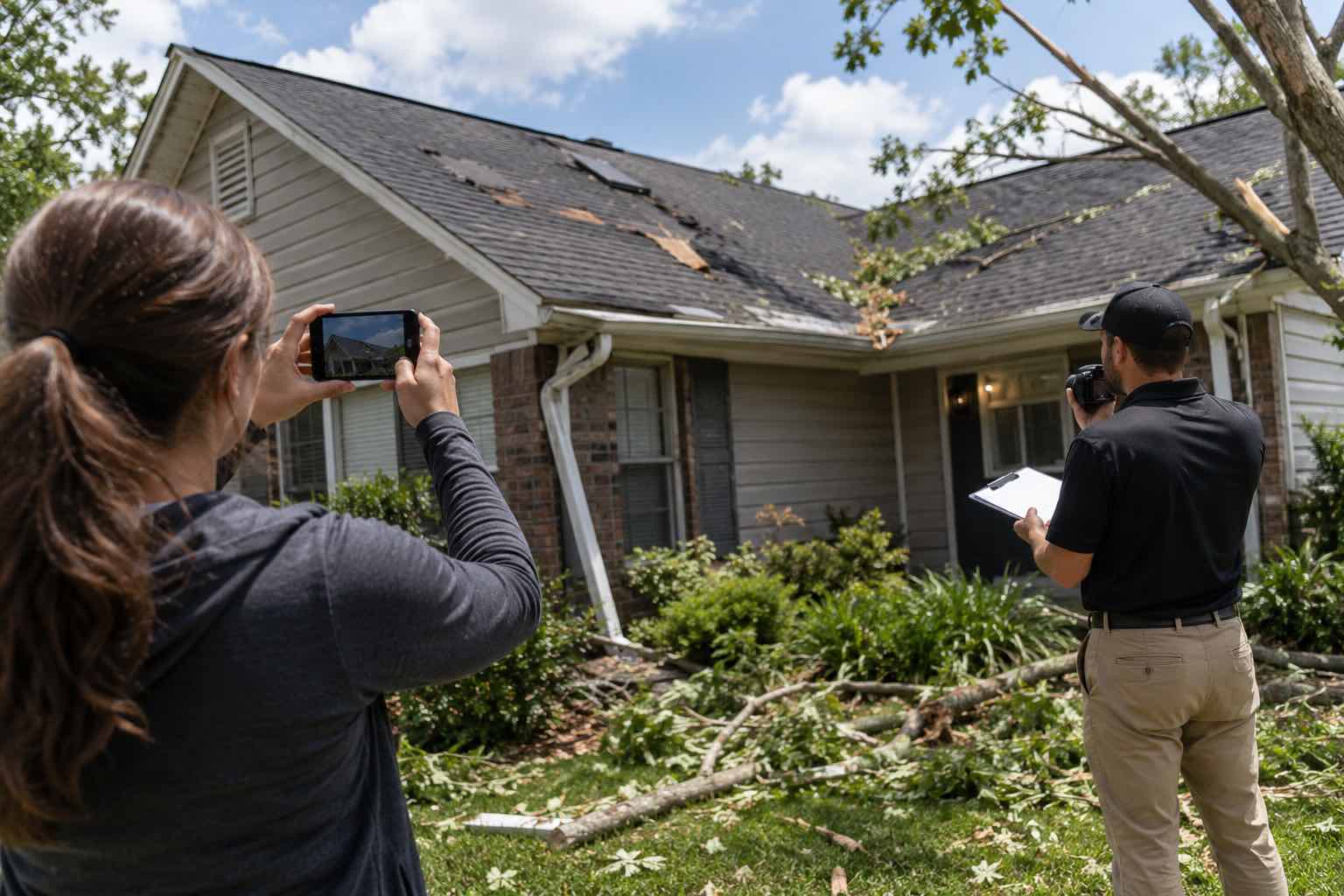
Step 4: Document Everything
Before moving debris or cleaning the property, take clear photographs.
Document:
- The entire house
- The fallen tree
- Roof damage
- Broken gutters
- Damaged siding
- Interior ceiling stains
- Water entering the home
- Fallen branches in the yard
Take photographs from multiple angles.
If possible, record short videos showing the overall condition of the property.
This documentation provides an accurate record of the damage and can be helpful when discussing repairs or filing an insurance claim.
Step 5: Prevent Additional Damage
If water is entering your home, take reasonable steps to reduce additional interior damage.
Examples include:
- Placing buckets beneath active leaks
- Moving furniture away from damaged ceilings
- Covering valuables with plastic sheeting
- Removing wet rugs or flooring when possible
If emergency roof tarping is needed, it should only be performed by trained professionals using proper safety equipment.
Avoid attempting temporary roof repairs yourself.
Protecting your family is always more important than protecting roofing materials.
Step 6: Schedule a Professional Roof Inspection
Even if the fallen tree appears to have caused only minor damage, it's essential to schedule a professional roof inspection.
Hidden problems may include:
- Cracked roof decking
- Lifted shingles
- Bent flashing
- Damaged ridge caps
- Water intrusion
- Structural movement
- Broken roof framing
- Compromised ventilation components
Many of these issues cannot be identified from the ground.
A comprehensive inspection provides a clear understanding of your roof's condition and helps determine the safest and most effective repair plan.
Learn more about our Professional Roof Inspection Services:
https://www.5starroofingusa.com/roofing/inspection
What Happens During a Professional Tree Damage Inspection?
When a tree or large branch strikes your roof, the visible damage is often only part of the problem.
A professional roof inspection looks beyond broken shingles to determine whether the impact affected the structural integrity of your roofing system.
During the inspection, roofing professionals evaluate:
- Asphalt shingles
- Roof decking
- Ridge caps
- Flashing
- Roof valleys
- Chimneys
- Skylights
- Plumbing vents
- Gutters and downspouts
- Fascia and soffits
- Attic insulation
- Signs of water intrusion
- Structural framing (when accessible)
This comprehensive inspection helps identify hidden damage before it becomes a larger and more expensive problem.
Common Types of Tree Damage We Find
Every storm is different, but several types of damage appear repeatedly after trees or large limbs impact residential roofs.
Broken or Missing Shingles
Even smaller branches can crack, tear, or completely remove asphalt shingles.
Once shingles are damaged, your roof becomes vulnerable to water intrusion during the next rainfall.
Damaged Roof Decking
The plywood decking beneath your shingles absorbs much of the force when a tree strikes the roof.
Sometimes the shingles appear relatively intact while the decking underneath has cracked or weakened.
This hidden damage often requires professional evaluation.
Bent or Damaged Flashing
Tree limbs frequently strike areas around:
- Chimneys
- Roof vents
- Skylights
- Roof valleys
These impacts can bend flashing or break protective seals, allowing water to enter your home.
Damaged Gutters
Large branches commonly:
- Bend gutters
- Pull gutters away from the fascia
- Crush downspouts
- Damage gutter hangers
Compromised gutters may no longer direct water safely away from your home, increasing the risk of foundation and siding problems.
Learn more about our gutter services:
https://www.5starroofingusa.com/gutters
Hidden Water Damage
Even if no active leak is visible, moisture may already be entering your roofing system.
Inspectors look for:
- Wet insulation
- Water stains
- Damp roof decking
- Mold growth
- Mildew odors
- Soft wood
Early detection helps prevent much larger repairs later.
Should You Remove the Tree Yourself?
In most situations, no.
If a large tree is resting on your roof, removing it yourself can actually make the damage worse.
The weight of the tree may currently be supporting portions of the damaged roof.
Improper removal can cause:
- Additional structural collapse
- Larger roof openings
- Interior ceiling damage
- Personal injury
Large trees should be removed by qualified tree removal professionals with experience handling storm-damaged structures.
Temporary Roof Protection
If your roof has been punctured or opened by a fallen tree, temporary protection may be necessary until permanent repairs can begin.
Professional emergency roof tarping helps:
- Reduce additional water intrusion
- Protect attic insulation
- Minimize interior damage
- Prevent mold growth
- Stabilize exposed roofing materials
Emergency tarping should always be installed safely and securely by trained professionals.
Repair or Roof Replacement?
Not every roof struck by a tree requires replacement.
The appropriate solution depends on:
- Size of the tree
- Location of impact
- Extent of structural damage
- Age of the roof
- Overall condition of the roofing system
Some homes only require localized repairs, while others benefit from a complete roof replacement if the impact compromised a significant portion of the roof.
After a professional inspection, you'll receive recommendations based on the actual condition of your roof.
Learn more about:
Roof Repair
https://www.5starroofingusa.com/roofing/repair
Roof Replacement
https://www.5starroofingusa.com/roofing/replacement
Mistakes Homeowners Should Avoid
Climbing Onto the Roof
Tree impacts can weaken the structure beneath your feet.
Always allow trained roofing professionals to inspect storm-damaged roofs safely.
Removing Heavy Branches Yourself
Large branches may be supporting damaged roofing components.
Improper removal can increase structural damage and create serious safety hazards.
Ignoring Minor Damage
A small puncture or cracked shingle today can become:
- Interior leaks
- Mold growth
- Rotting decking
- Damaged drywall
- Expensive structural repairs
Early inspections almost always save money.
Waiting Until the Next Storm
Many homeowners delay repairs because the roof isn't currently leaking.
Unfortunately, the next heavy rainfall often exposes hidden damage that could have been repaired much earlier.
Why Homeowners Across the Triad Trust 5 Star Roofing
At 5 Star Roofing & Restoration, we understand how stressful storm damage can be.
Our goal is to provide honest inspections, quality workmanship, and clear communication so homeowners know exactly what condition their roof is in.
We're proud to serve homeowners throughout Greensboro, Winston-Salem, High Point, Kernersville, Summerfield, Oak Ridge, Lewisville, Burlington, Jamestown, Clemmons, and surrounding North Carolina communities.
Our credentials include:
- North Carolina's Best Roofing Contractor – 2026
- GAF Master Elite® Contractor
- GAF President's Club Award Winner
- GAF Triple Excellence Award Recipient
- BBB Accredited Business – A+ Rating
- Member of the National Roofing Contractors Association (NRCA)
Learn why homeowners trust our team:
https://www.5starroofingusa.com/why-homeowners-trust-5-star-roofing
Read customer reviews:
https://www.5starroofingusa.com/about/reviews
Frequently Asked Questions
Is it safe to stay inside a house after a tree falls on the roof?
It depends on the extent of the damage.
If you notice sagging ceilings, cracked walls, shifting floors, exposed electrical wiring, or believe the home's structure has been compromised, leave the home immediately and contact emergency services.
If the damage appears minor, avoid the affected area until a professional inspection can determine whether the structure is safe.
Should I remove a fallen tree from my roof?
No.
Large trees and heavy branches should only be removed by qualified tree removal professionals.
Removing a tree incorrectly can worsen structural damage, create additional roof collapse, or cause serious injury.
Can a small branch really damage my roof?
Yes.
Even relatively small branches can:
- Crack shingles
- Damage flashing
- Dent gutters
- Remove protective granules
- Create small punctures
While the damage may not immediately cause a leak, it can weaken your roofing system and shorten its lifespan.
What if my roof isn't leaking?
That's good news—but it doesn't necessarily mean your roof escaped without damage.
Many tree impacts create hidden problems that don't become noticeable until the next heavy rainfall.
Scheduling a professional inspection helps identify these issues before they become costly repairs.
Does homeowners insurance cover tree damage?
Many homeowners insurance policies cover storm-related tree damage when the tree falls because of a covered weather event.
Coverage depends on the circumstances of the loss and the terms of your individual policy. Reviewing your policy and speaking with your insurance provider can help clarify your coverage.
How quickly should I have my roof inspected?
As soon as it's safe after the storm.
Prompt inspections can identify hidden damage, reduce the risk of additional water intrusion, and help homeowners make informed decisions about repairs.
Can tree roots damage my roof?
No.
Tree roots don't directly affect roofing systems.
However, overhanging branches increase the risk of storm damage, scrape shingles during windy conditions, and allow leaves and debris to accumulate in gutters and roof valleys.
Regular tree trimming can help reduce these risks.
Should I trim trees near my home?
Yes.
Keeping tree limbs trimmed away from your roof is one of the best ways to reduce the likelihood of storm-related roof damage.
Proper pruning also helps:
- Reduce debris accumulation
- Improve roof ventilation
- Minimize moss growth
- Lower the risk of branches contacting shingles during high winds
Protect Your Home After Tree Damage
A fallen tree can leave homeowners feeling overwhelmed, but taking the right steps immediately after the storm can make the recovery process much easier.
Prioritize safety, document the damage, avoid climbing onto the roof, and schedule a professional inspection as soon as possible.
Even if the damage appears minor, hidden structural issues and water intrusion may already be developing beneath the surface.
At 5 Star Roofing & Restoration, we're committed to helping homeowners throughout Greensboro, Winston-Salem, High Point, Kernersville, Summerfield, Oak Ridge, Lewisville, Burlington, Jamestown, Clemmons, and surrounding North Carolina communities recover quickly and confidently after severe weather.
Whether your roof needs a simple repair, emergency protection, or a complete replacement, our experienced team is here to help with honest guidance and quality workmanship.
Schedule Your FREE Storm Damage Roof Inspection
Storm Damage Roof Repair
https://www.5starroofingusa.com/roofing/storm-damage
Request a Free Estimate
https://www.5starroofingusa.com/request-an-estimate
Related Resources
Continue learning with these homeowner guides:
- What to Do After a Severe Storm Damages Your Roof
- 10 Signs Your Roof Has Storm Damage (Even If It Looks Fine)
- Can a Roof Leak Weeks After a Storm?
- Wind Damage vs. Normal Roof Aging
- Should You Call Your Insurance Company or a Roofer First?
- What Does a Storm Damage Roof Inspection Include?
- Storm Damage Roof Repair
- Roof Inspection Services
- Roof Repair Services
- Roof Replacement Services
- Gutter Services
- Why Homeowners Trust 5 Star Roofing
- Customer Reviews
- Financing Options
Helpful resources from trusted organizations:
- National Weather Service Storm Safety: https://www.weather.gov/safety
- FEMA Disaster Recovery: https://www.fema.gov
- Insurance Institute for Business & Home Safety: https://ibhs.org
- National Roofing Contractors Association: https://www.nrca.net
- GAF Roofing Learning Center: https://www.gaf.com
Last Updated: June 2026
Reviewed by: 5 Star Roofing & Restoration
Serving homeowners throughout Greensboro, Winston-Salem, High Point, Kernersville, Summerfield, Oak Ridge, Lewisville, Burlington, Jamestown, Clemmons, and the surrounding North Carolina Triad.
Fill out our quick contact form to get a free estimate from one of our Roofers
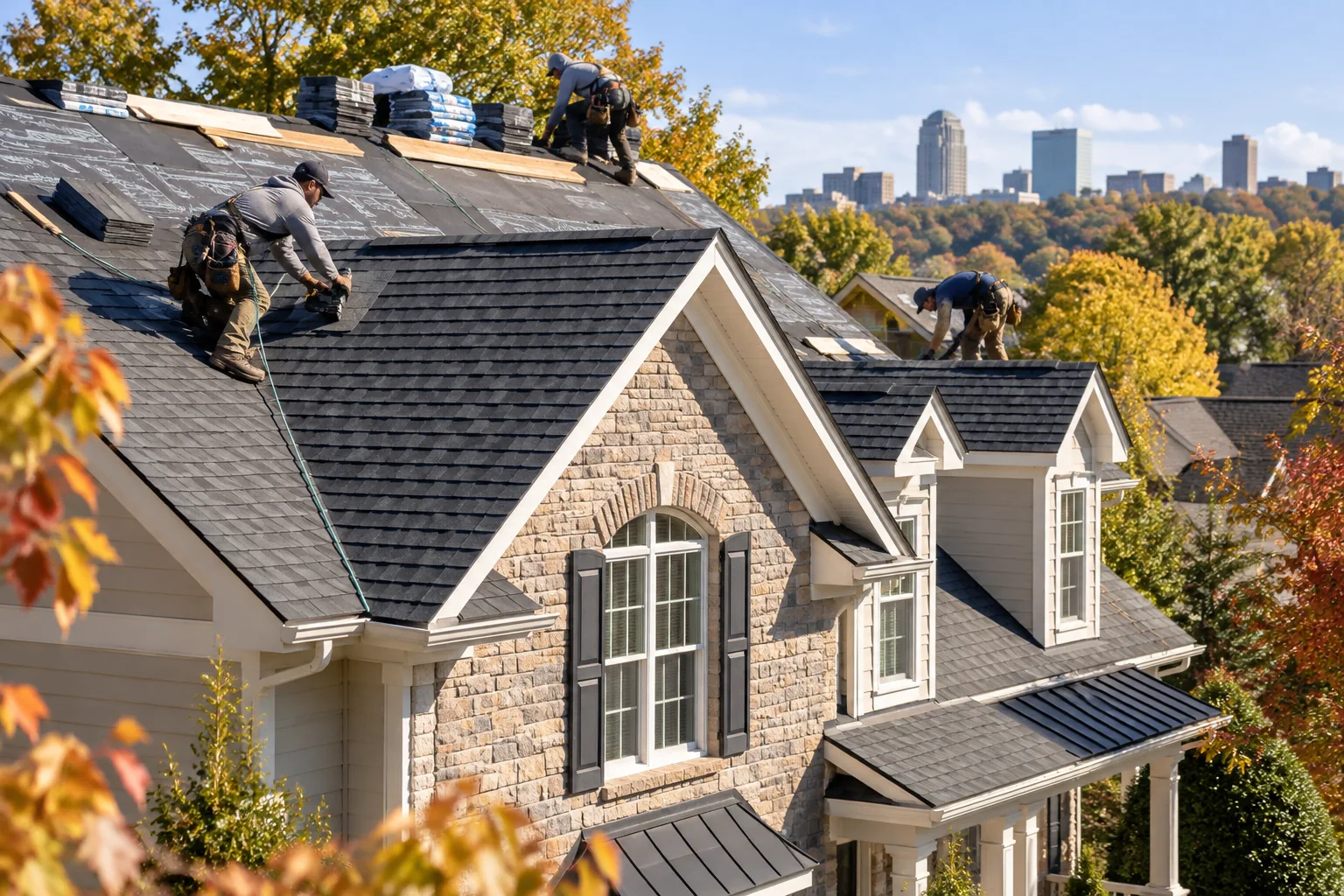

Contact us today for a free estimate, and let us show you why we're the preferred choice for homeowners and businesses alike. We're a family-owned local roofing company.
Top Roof Repair & Replacement Greensboro
Whether you're in need of a roof repair, full shingle roof replacement in Greensboro, or a completely new roof in Greensboro NC, our expert team is ready to deliver high-quality results with unmatched professionalism.We also specialize in insurance roof replacement in Greensboro, helping homeowners navigate the claims process after storm or hail damage with ease. If you've experienced wind or storm damage and need roof repair in Greensboro, we’re here to respond quickly and protect your home from further harm.Our services extend beyond traditional repairs to include metal roofing, commercial roofing, and complete residential roofing solutions — ensuring we have the right system for every customer and every roof type.

Metal Roofing
We specialize in installing GAF Timbersteel metal roofs: a stylish and energy efficient choice.

Roof Repair
We repair roof damage and roof leaks, execute roof replacements, and ensure that every square foot of your roof is in top condition.

Roof Replacement
Roof replacement is crucial not just for structural integrity but for a home's overall value.

Roof Inspection
We review both the interior and exterior components of the roof to identify potential issues.

Roof Rejuvenation
We methodically clean all roof types to improve curb appeal and avoid potential issues with this valuable preventative maintenance.

New Roof Installation
We take pride in installing cutting edge, long-lasting, and energy efficient roofs.