
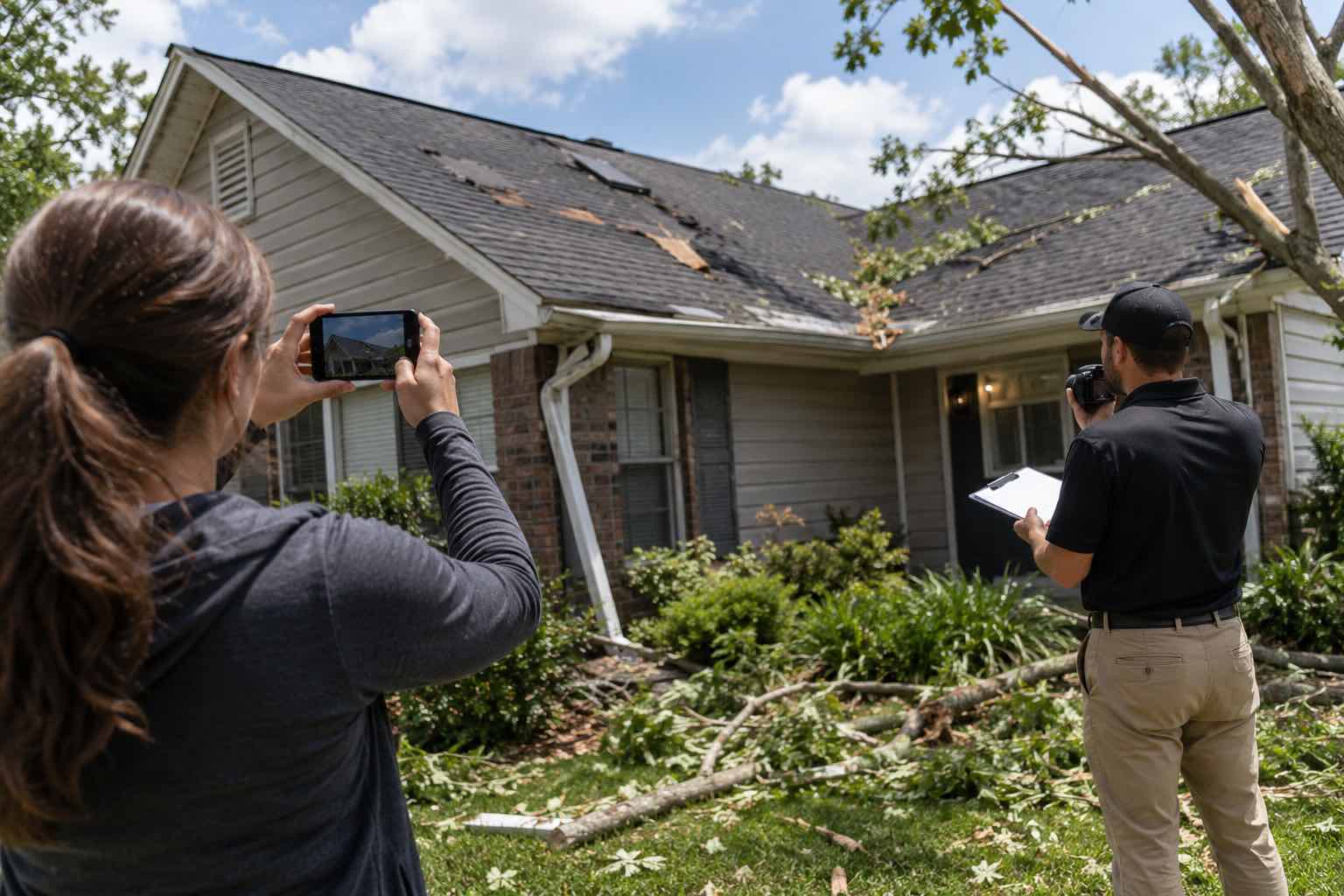
How to Document Roof Storm Damage for an Insurance Claim
Reading Time: 10–12 Minutes
After a severe storm damages your roof, it's natural to think about repairs right away.
However, before any cleanup or repair work begins, one of the most important things you can do is document the damage thoroughly.
Good documentation creates a clear record of your home's condition immediately after the storm. It can also help you keep track of the damage, communicate more effectively with roofing professionals, and prepare if you decide to contact your homeowners insurance company.
At 5 Star Roofing & Restoration, we've helped homeowners throughout Greensboro, Winston-Salem, High Point, Kernersville, Summerfield, Oak Ridge, Lewisville, Burlington, Jamestown, Clemmons, and surrounding North Carolina communities assess storm damage after high winds, heavy rain, and fallen trees. One of the first recommendations we make is simple:
Document everything before making permanent repairs.
This guide explains what to photograph, what information to record, and how a professional roof inspection can help you better understand your roof's condition after severe weather.
Quick Answer
After storm damage, document your property as soon as it is safe to do so.
Take clear photos and videos of:
- Your entire home
- Roof damage visible from the ground
- Missing shingles
- Bent gutters
- Fallen tree limbs
- Damaged siding
- Ceiling stains
- Interior water damage
- Debris around the property
Record the date of the storm and schedule a professional roof inspection to identify any hidden damage that may not be visible from the ground.
Learn more about our Storm Damage Roof Repair Services:
https://www.5starroofingusa.com/roofing/storm-damage
Why Documentation Matters
Storm damage can change quickly.
A roof that appears only slightly damaged today may experience additional water intrusion after the next rainfall.
Documenting the condition of your home immediately after the storm creates a helpful record of:
- Visible damage
- Storm debris
- Areas needing attention
- Overall property condition
Good documentation also helps roofing professionals better understand the progression of any damage over time.
Step 1: Make Sure It's Safe First
Before taking photographs, confirm that the property is safe.
Avoid areas with:
- Downed power lines
- Unstable trees
- Flooding
- Structural collapse
- Broken electrical equipment
Never climb onto a storm-damaged roof to take pictures.
Professional roofing inspectors have specialized safety equipment and training to evaluate roofs safely.
Step 2: Photograph the Entire Property
Begin with wide-angle photographs.
Capture:
- Front of the home
- Back of the home
- Both sides
- Roof from multiple ground-level angles
- Driveway
- Yard
- Landscaping
These photos provide important context and show the overall condition of the property following the storm.
Step 3: Take Close-Up Photos of Visible Damage
After photographing the entire property, focus on individual areas.
Examples include:
- Missing shingles
- Lifted shingles
- Bent gutters
- Fallen branches
- Damaged fascia
- Broken siding
- Detached flashing
- Damaged vents
- Skylights
- Chimneys
Take several photographs from different angles whenever possible.
Avoid using excessive zoom, which may reduce image quality.
Step 4: Photograph Interior Damage
Storm damage isn't always limited to the exterior.
Walk through your home and document any signs of water intrusion.
Photograph:
- Ceiling stains
- Bubbling paint
- Wet drywall
- Peeling wallpaper
- Damp flooring
- Water dripping from ceilings
- Wet attic insulation
- Mold or mildew growth
If possible, photograph the same area from both close-up and wider angles.
Step 5: Record Videos
Short videos can provide additional context that photographs sometimes miss.
Walk slowly around the property while recording:
- Roof damage visible from the ground
- Fallen trees
- Damaged gutters
- Water entering the home
- Active leaks
- Wind-blown debris
Narrating the date of the storm and describing what you're seeing can also be helpful for your personal records.
Step 6: Record Important Details
Along with photographs, write down basic information about the storm while it's still fresh in your memory.
Include:
- Date of the storm
- Approximate time
- Type of weather (high winds, hail, heavy rain, fallen tree, etc.)
- Areas of the home affected
- Any immediate safety concerns
- When the damage was first noticed
Keeping these notes together with your photos creates a complete record of the event.
Step 7: Schedule a Professional Roof Inspection
Some of the most serious storm damage isn't visible from the ground.
A professional inspection can identify hidden problems such as:
- Lifted shingles
- Broken adhesive seals
- Flashing damage
- Soft roof decking
- Damaged vent boots
- Water intrusion
- Hidden structural concerns
Knowing the full condition of your roof allows you to make informed decisions about the next steps.
Learn more about our Professional Roof Inspection Services:
https://www.5starroofingusa.com/roofing/inspection
What Information Should You Keep?
In addition to photos and videos, it's helpful to organize all storm-related information in one place.
Consider keeping:
- Photos and videos
- Notes about the storm
- Dates and times
- Inspection reports
- Repair estimates
- Receipts for emergency protection (such as roof tarping)
- Communication records with contractors or insurance representatives
Having everything organized makes it much easier to reference later if needed.
Should You Make Temporary Repairs?
If your roof is actively leaking, taking reasonable steps to reduce additional damage is important.
Examples include:
- Placing buckets beneath leaks
- Moving furniture away from affected areas
- Covering valuables with plastic sheeting
- Removing wet rugs if it can be done safely
If your roof has been punctured or has missing sections of shingles, a professionally installed emergency roof tarp may help reduce additional water intrusion until permanent repairs can be completed.
Avoid climbing onto the roof or attempting repairs yourself after a storm.
Learn more:
Emergency Roof Tarping: Everything You Need to Know
https://www.5starroofingusa.com/blog/emergency-roof-tarping-after-storm-damage
What a Professional Roof Inspection Can Reveal
Some of the most significant storm damage cannot be identified from the ground.
During a comprehensive inspection, roofing professionals evaluate:
- Asphalt shingles
- Flashing
- Ridge caps
- Roof valleys
- Plumbing vent boots
- Chimneys
- Skylights
- Gutters
- Roof decking
- Attic ventilation
- Signs of hidden water intrusion
This inspection provides a complete picture of your roof's condition and helps determine whether repairs or replacement may be necessary.
Learn more:
What Does a Storm Damage Roof Inspection Include?
https://www.5starroofingusa.com/blog/what-does-a-storm-damage-roof-inspection-include
Common Documentation Mistakes Homeowners Make
Waiting Too Long to Take Photos
The condition of your property can change quickly after a storm.
Wind may move debris, rain may worsen leaks, and cleanup efforts can alter the scene.
Photograph the property as soon as it's safe to do so.
Only Photographing the Roof
Storm damage often affects more than shingles.
Be sure to document:
- Gutters
- Downspouts
- Siding
- Windows
- Fences
- Landscaping
- Detached structures
- Interior water damage
A complete record provides a better understanding of the storm's overall impact.
Taking Only Close-Up Photos
Close-up images are important, but they don't always show where the damage occurred.
Capture both:
- Wide shots of the entire home
- Medium-distance photos
- Detailed close-ups
This creates a more complete visual record.
Cleaning Up Before Taking Photos
It's understandable to want to begin cleanup immediately.
However, documenting fallen branches, debris, damaged gutters, and visible roof damage before removing them provides a more accurate record of the storm's effects.
Skipping the Professional Inspection
Many forms of storm damage remain hidden beneath the surface.
Even if your photographs don't reveal major issues, a professional inspection may identify:
- Lifted shingles
- Broken adhesive seals
- Bent flashing
- Hidden moisture intrusion
- Soft roof decking
Early detection often helps prevent more extensive repairs later.
Why Homeowners Across the Triad Trust 5 Star Roofing
At 5 Star Roofing & Restoration, we believe homeowners deserve honest guidance after severe weather.
Our inspections are designed to provide a clear understanding of your roof's condition so you can make informed decisions about protecting your home.
We're proud to serve homeowners throughout Greensboro, Winston-Salem, High Point, Kernersville, Summerfield, Oak Ridge, Lewisville, Burlington, Jamestown, Clemmons, and surrounding North Carolina communities.
Our credentials include:
- North Carolina's Best Roofing Contractor – 2026
- GAF Master Elite® Contractor
- GAF President's Club Award Winner
- GAF Triple Excellence Award Recipient
- BBB Accredited Business – A+ Rating
- Member of the National Roofing Contractors Association (NRCA)
Whether your home needs a detailed inspection, storm damage repairs, or a complete roof replacement, our experienced team is committed to providing quality workmanship, honest recommendations, and exceptional customer service.
Learn why homeowners trust us:
https://www.5starroofingusa.com/why-homeowners-trust-5-star-roofing
Read customer reviews:
https://www.5starroofingusa.com/about/reviews
Fill out our quick contact form to get a free estimate from one of our Roofers


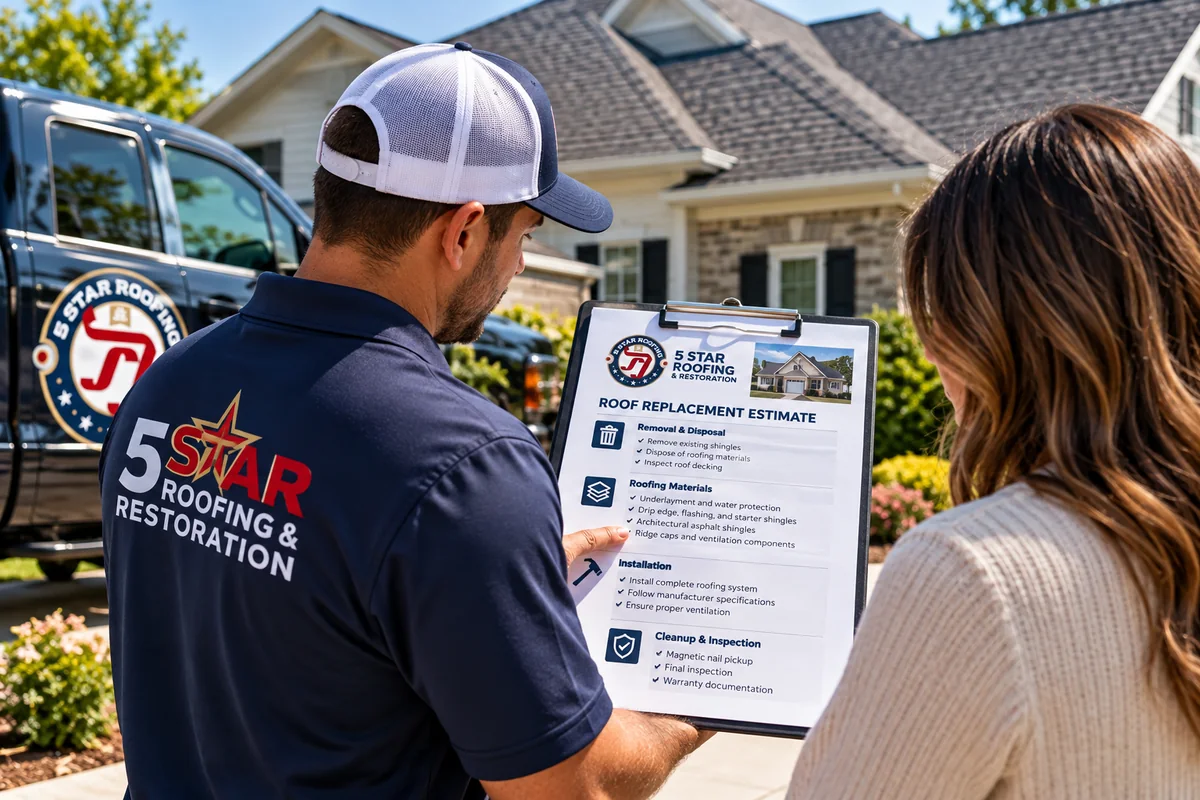
Contact us today for a free estimate, and let us show you why we're the preferred choice for homeowners and businesses alike. We're a family-owned local roofing company.
Top Roof Repair & Replacement Greensboro
Whether you're in need of a roof repair, full shingle roof replacement in Greensboro, or a completely new roof in Greensboro NC, our expert team is ready to deliver high-quality results with unmatched professionalism.We also specialize in insurance roof replacement in Greensboro, helping homeowners navigate the claims process after storm or hail damage with ease. If you've experienced wind or storm damage and need roof repair in Greensboro, we’re here to respond quickly and protect your home from further harm.Our services extend beyond traditional repairs to include metal roofing, commercial roofing, and complete residential roofing solutions — ensuring we have the right system for every customer and every roof type.

Metal Roofing
We specialize in installing GAF Timbersteel metal roofs: a stylish and energy efficient choice.

Roof Repair
We repair roof damage and roof leaks, execute roof replacements, and ensure that every square foot of your roof is in top condition.

Roof Replacement
Roof replacement is crucial not just for structural integrity but for a home's overall value.

Roof Inspection
We review both the interior and exterior components of the roof to identify potential issues.

Roof Rejuvenation
We methodically clean all roof types to improve curb appeal and avoid potential issues with this valuable preventative maintenance.

New Roof Installation
We take pride in installing cutting edge, long-lasting, and energy efficient roofs.