
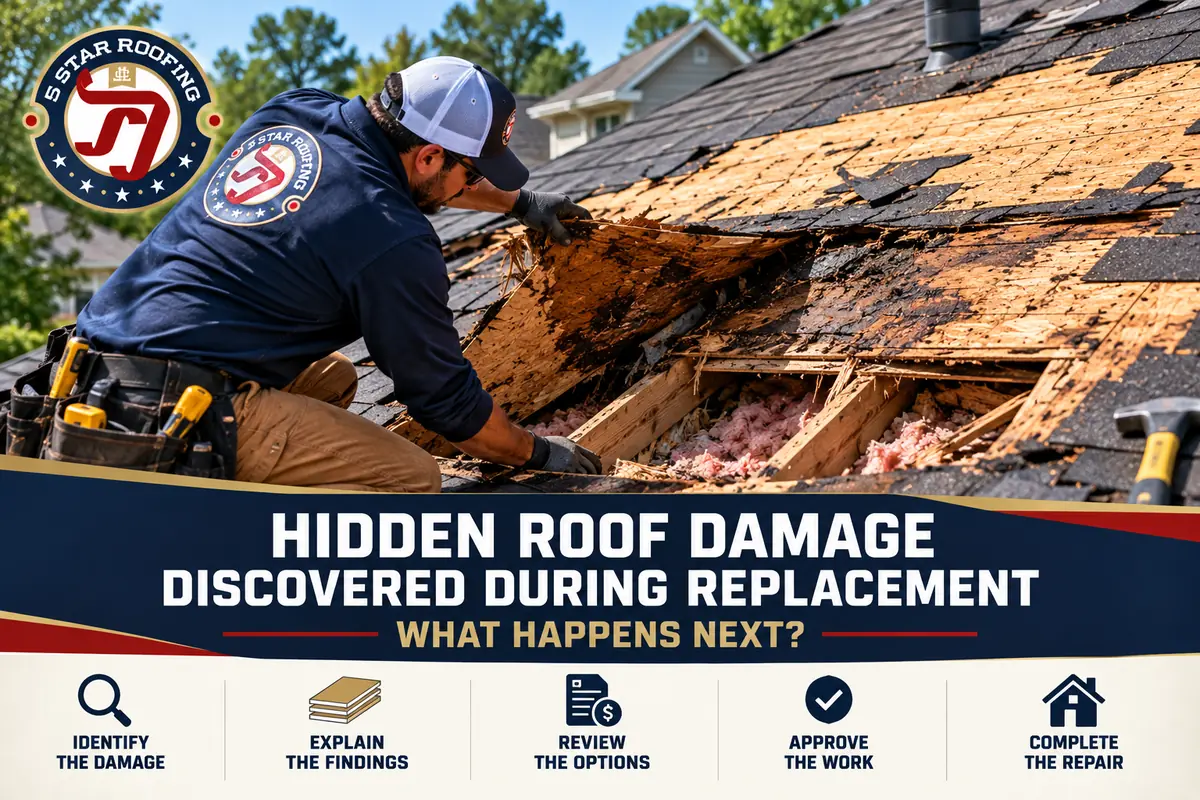
Hidden Roof Damage Discovered During Replacement: What Happens Next?
You've selected your roofing contractor, approved the estimate, and scheduled your roof replacement. Everything seems to be going according to plan—until the crew removes the old shingles and discovers damaged wood underneath.
Suddenly, you're facing questions you weren't expecting.
How serious is the damage? Does the entire roof need additional repairs? Will the replacement cost more than the original estimate? And should the contractor continue working before you approve the additional expense?
Hidden roof damage can sometimes be discovered during a complete roof replacement because the underlying decking and other components aren't fully visible until the existing roofing materials are removed.
The good news is that discovering damage doesn't automatically mean your entire roofing project is in trouble. What matters is identifying the problem, understanding the necessary repairs, and documenting any changes to the original scope of work.
For homeowners in Greensboro, Winston-Salem, High Point, and surrounding communities, our Piedmont Triad roofing services include roof inspections and replacement evaluations designed to help identify roofing problems and explain appropriate solutions.
This guide covers the most common types of concealed roof damage, how contractors address them, what additional repairs may cost, and how to protect yourself from unexpected billing disputes.
Quick Answer: What Happens When Roofers Find Hidden Damage?
When a roofing crew discovers concealed damage during replacement, the appropriate response is to evaluate the condition before covering it with new materials.
A typical process involves:
- Identify the damage: Determine which roofing components are affected.
- Document the findings: Take photographs and record the location and extent of the problem.
- Explain the recommended repair: Tell the homeowner why corrective work is necessary.
- Review additional costs: Identify any charges not included in the original estimate.
- Obtain approval: Follow the contract's change-order procedure before performing additional billable work, except where immediate safety or protective measures are necessary and authorized.
- Complete the repairs: Replace or correct affected materials as required.
- Continue installation: Resume the roofing work once the underlying conditions are suitable.
The specific procedure depends on the contract, severity of the damage, and any immediate safety concerns.
Homeowner tip: Ask for photographs, a written explanation, and an itemized change order whenever unexpected repairs are proposed.
Why Can Roof Damage Remain Hidden Until Replacement?
A residential roofing system contains several layers and components.
On a typical asphalt-shingle roof, these can include:
- Asphalt shingles.
- Underlayment.
- Water-protection membranes in designated areas.
- Flashing.
- Roof decking.
- Structural framing.
- Ventilation components.
The shingles are the most visible part of the system, but they don't reveal everything happening underneath.
During an inspection, a contractor can evaluate accessible roof surfaces and may identify visible warning signs. However, the roofing materials can conceal deterioration that cannot be confirmed without removing them.
Can a Contractor Detect Hidden Damage Before Installation?
Sometimes.
Warning signs may include:
- Repeated roof leaks.
- Interior ceiling stains.
- Visible moisture in the attic.
- Soft or deteriorated decking in accessible areas.
- Sagging roof sections.
- Damaged flashing.
- Evidence of previous repairs.
- Discoloration or deterioration around penetrations.
But these signs don't always reveal the full extent of the problem.
A professional inspection can reduce uncertainty, but it cannot guarantee that every concealed condition will be discovered before tear-off.
1. Rotten or Water-Damaged Roof Decking
One of the most common concerns during a roof replacement is damaged decking.
Roof decking is the surface beneath the roofing materials that supports the roof covering and transfers loads to the roof structure.
Many residential roofs use plywood or oriented strand board, commonly called OSB.
What Causes Roof Decking to Rot?
Potential causes include:
- Long-term roof leaks.
- Failed flashing.
- Repeated moisture exposure.
- Poorly managed condensation.
- Inadequate moisture control.
- Previous roofing defects.
- Water intrusion around roof penetrations.
Wood-based decking can deteriorate when exposed to persistent moisture.
How Do Roofers Identify Damaged Decking?
After removing the existing roofing materials, contractors can inspect exposed areas for:
- Soft or deteriorated wood.
- Delamination.
- Swelling.
- Discoloration associated with moisture.
- Damaged panel edges.
- Loose or unsuitable fastening surfaces.
- Areas that no longer provide adequate support.
Discoloration alone does not necessarily prove that decking must be replaced. The decision should be based on the material's actual condition and suitability.
Does All the Decking Need to Be Replaced?
Not necessarily.
If damage is limited to a few panels, localized replacement may be sufficient.
More extensive deterioration may require replacing a larger area.
The appropriate scope depends on the condition of the decking and applicable structural and installation requirements.
Important: New shingles should not be installed over decking that is unsuitable for the selected roofing system.
2. Hidden Damage Around Chimneys and Flashing
Flashing helps manage water around roof intersections and openings.
It is commonly installed around:
- Chimneys.
- Skylights.
- Plumbing vents.
- Dormers.
- Sidewalls.
- Roof valleys.
- Roof-to-wall connections.
When flashing deteriorates or was incorrectly installed, water may enter beneath the roofing materials.
What Problems Might Be Discovered?
A contractor may find:
- Water-damaged decking.
- Deteriorated wood near the chimney.
- Damaged or improperly installed flashing.
- Corroded metal components.
- Evidence of previous leak repairs.
- Moisture-related deterioration around penetrations.
How Is Flashing Damage Repaired?
The repair depends on the specific condition.
Work may involve replacing affected flashing, correcting installation details, or repairing damaged surrounding materials.
If the leak originates from a chimney structure, masonry, or another non-roofing component, additional specialized evaluation may be necessary.
Ask the contractor to explain whether the proposed work addresses the actual source of water intrusion.
3. Structural Damage Beneath the Roof
Some concealed conditions involve more than the roof decking.
Roof framing components, such as rafters or trusses, can sometimes be affected by prolonged moisture exposure or other problems.
Warning Signs of Structural Concerns
Potential indicators include:
- Significant roof sagging.
- Damaged framing members.
- Deteriorated structural connections.
- Severe moisture-related damage.
- Unusual movement or deformation.
- Previous modifications affecting the roof structure.
These conditions are more serious than a small area of damaged decking.
What Happens If Structural Damage Is Discovered?
The roofing contractor may need to stop the affected portion of work and arrange for further assessment.
Depending on the problem, a qualified structural professional or other appropriately licensed specialist may be needed.
The repair may require additional materials, approvals, inspections, or scheduling.
Do not treat significant structural repairs as an ordinary shingle replacement task. The appropriate repair should be established before the affected area is covered.
4. Hidden Moisture and Mold-Like Growth
Moisture problems may become visible after the old roof covering is removed or during attic evaluation.
A contractor may encounter:
- Damp decking.
- Water staining.
- Deteriorated insulation.
- Condensation-related moisture.
- Visible mold-like growth.
- Evidence of recurring leaks.
Does Mold-Like Growth Mean the Roof Must Be Replaced?
Not automatically.
Visible growth or staining should be evaluated in context. The cause and extent of moisture exposure matter.
A roofing contractor can address roofing defects within the agreed scope, but significant contamination or indoor air-quality concerns may require an appropriately qualified remediation professional.
The underlying moisture source must also be corrected.
Simply covering affected materials without addressing the cause can allow problems to continue.
5. Previous Roofing Installation Problems
Some concealed problems result from earlier roofing work.
Examples may include:
- Improper fastening.
- Inadequate flashing details.
- Unsuitable underlayment.
- Poorly executed roof repairs.
- Incorrect roof-edge treatment.
- Improperly installed ventilation components.
- Multiple roofing layers.
These conditions may not be fully visible until the old covering is removed.
Does Every Existing Installation Defect Require Extra Work?
Not necessarily.
Some corrections may already be included in the original replacement scope.
Others may require additional work if the contractor discovers conditions that were not reasonably identifiable before installation.
Ask the contractor to distinguish between work already included in the contract and genuinely unexpected repairs.
6. What If the Contractor Discovers Multiple Layers of Roofing?
Sometimes, an existing roof contains more layers than initially anticipated.
Removing multiple layers can increase:
- Labor requirements.
- Disposal volume.
- Tear-off time.
- The amount of material requiring removal.
It may also reveal additional concealed conditions.
The estimate should state how many layers are included in the quoted removal price and what happens if additional layers are discovered.
For a detailed comparison of replacement methods, read our guide to roof tear-off versus roof overlay.
How Much Does Hidden Roof Damage Cost to Repair?
There is no reliable single price for all concealed roof damage.
The additional cost depends on the type and extent of damage, required materials, labor, access, and whether specialized repairs are necessary.
Common Additional Cost Categories
Discovered conditionPotential additional workLocalized damaged deckingReplace affected plywood or OSBExtensive decking deteriorationReplace a larger roof deck areaDamaged flashingReplace or correct affected flashingDeteriorated framingStructural assessment and appropriate repairsHidden moisture problemsIdentify and correct moisture source; additional remediation if neededMultiple roofing layersAdditional removal and disposalUnexpected ventilation deficienciesEvaluate and correct applicable ventilation components
The table describes possible work, not fixed prices.
How Is Additional Decking Usually Priced?
Some roofing contracts establish a unit price for additional decking replacement.
Others include a specified allowance or require a separate written estimate.
For example, a contract might identify the price for each additional sheet of decking or another defined unit of work.
The exact pricing method should be established before installation.
Can You Set Aside a Contingency Budget?
Yes. Homeowners may choose to maintain a contingency reserve for unexpected work.
The appropriate amount depends on the roof's age, condition, inspection findings, and household finances.
Rather than assuming a fixed percentage applies to every project, ask your contractor which concealed conditions are most plausible and how they would be priced.
For broader replacement budgeting, see our North Carolina roof replacement cost guide.
What Is a Roofing Change Order?
A change order is a documented modification to the original construction agreement.
It may be necessary when additional work is discovered or the homeowner requests a change after signing the contract.
What Should a Change Order Include?
A clear change order should identify:
- The newly discovered condition.
- Where the problem is located.
- Why additional work is recommended.
- The materials or repairs required.
- The additional price.
- Any effect on the project schedule.
- The homeowner's approval.
- Any changes to the original contract.
Photographs can provide helpful documentation.
Should You Approve Additional Work Verbally?
Written approval is generally preferable because it creates a record of what was agreed upon.
A verbal conversation may not clearly establish the scope, cost, or authorization.
Review your contract's change-order terms and request written confirmation before approving additional billable work.
Can a Roofer Continue Without Your Approval?
The answer depends on the contract, applicable law, the type of work, and whether immediate protective or safety measures are necessary.
As a general practice, a contractor should communicate unexpected conditions and follow the agreed authorization procedure before performing additional billable repairs.
However, a dangerous or exposed condition may require immediate temporary protection or other appropriate action.
What Should You Do If Work Is Already Underway?
Ask the project supervisor:
- What damage was discovered?
- Is the affected area safe?
- Can the area be temporarily protected?
- What repairs are necessary before installation can continue?
- What will the repairs cost?
- Does the contract already cover the work?
- Can I review photographs and a written change order?
Avoid authorizing work you do not understand.
If a dispute arises, review the signed contract and consider obtaining independent professional or legal advice where appropriate.
How Long Can Hidden Damage Delay Roof Replacement?
A small amount of damaged decking may be corrected during the normal installation process.
More extensive problems can delay the project.
Potential causes of delay include:
- Additional material requirements.
- Extensive decking replacement.
- Structural assessment.
- Specialized repair work.
- Required approvals or inspections.
- Weather.
- Coordination with other contractors.
The roofing crew should explain whether the damage affects the critical path of the installation and provide an updated schedule when possible.
What Happens If the Roof Must Remain Exposed?
The contractor should evaluate appropriate temporary protection and communicate the plan for securing the affected area.
Temporary weather protection may reduce exposure but is not equivalent to a completed roof.
Ask who is responsible for monitoring and maintaining temporary coverings if the project is delayed.
Will Homeowners Insurance Cover Hidden Roof Damage?
Possibly, but coverage depends on the policy and cause of the damage.
Insurance may cover certain damage resulting from covered events, such as qualifying wind or hail losses.
However, ordinary deterioration, deferred maintenance, and long-term wear are generally not covered reasons for replacement.
Water-related losses can involve additional policy conditions and exclusions.
What Should You Do If Hidden Damage May Be Related to a Covered Event?
Consider these steps:
- Document the discovered conditions.
- Preserve relevant photographs and records.
- Review your insurance policy.
- Contact your insurer when appropriate.
- Follow applicable claim-reporting procedures.
- Keep copies of estimates and approved change orders.
A roofing contractor can document visible conditions and provide repair estimates.
The insurance company determines coverage under the policy.
Do not assume that every hidden problem discovered during replacement qualifies for an insurance claim.
How Can Homeowners Reduce the Risk of Unexpected Roofing Costs?
Not every concealed problem can be prevented or discovered in advance.
However, careful planning can reduce uncertainty.
Before Signing the Contract
- Request a thorough roof assessment.
- Ask about visible signs of moisture damage.
- Discuss the age and history of the roof.
- Confirm whether the estimate includes decking repairs.
- Ask for unit pricing for additional decking.
- Review the existing roof removal scope.
- Clarify flashing and ventilation work.
- Confirm how change orders are approved.
- Ask about permit responsibilities.
- Review the payment schedule.
Our roof replacement estimate checklist explains the major components homeowners should compare.
Before Installation Day
- Review the final scope of work.
- Confirm the project supervisor's contact information.
- Discuss how unexpected conditions will be reported.
- Establish who can authorize additional charges.
- Ask how exposed areas will be protected if work is delayed.
During Installation
- Request photographs of concealed damage.
- Ask for an explanation of the repair.
- Confirm whether the work is included in the original estimate.
- Review additional pricing.
- Approve changes according to the contract.
- Retain copies of all documentation.
After Installation
- Obtain the final invoice.
- Review approved change orders.
- Keep photographs and project records.
- Obtain applicable warranty documentation.
- Confirm agreed repairs and cleanup are complete.
Hidden Roof Damage in Greensboro, Winston-Salem, and High Point
Concealed roofing problems can occur throughout the Piedmont Triad.
The appropriate response depends on the property's actual condition, construction, and maintenance history.
Greensboro: Aging Roofs and Previous Repairs
Greensboro includes established residential neighborhoods and newer developments.
Some properties may have older roof coverings, previous repairs, or complex flashing details that warrant attention during replacement.
Homeowners can learn about local inspection and replacement options through our Greensboro roofing services.
Winston-Salem: Older Homes and Complex Rooflines
Winston-Salem features a variety of residential architectural styles.
Some older properties may require additional evaluation of existing decking, roof intersections, and previous roofing work.
Our Winston-Salem roofing services include roof inspections, repairs, and replacement evaluations.
High Point: Storm Exposure and Concealed Moisture
High Point homeowners may encounter roof damage associated with aging materials, recurring leaks, or severe weather.
An inspection can help identify visible problems, but concealed conditions may still become apparent during tear-off.
Explore our High Point roofing services for information about roof repairs and replacement options.
Surrounding Piedmont Triad Communities
Homeowners in Kernersville, Jamestown, Summerfield, Oak Ridge, and nearby communities should also discuss potential concealed damage before approving a roof replacement.
A contractor should evaluate the property rather than assume that every home requires the same repairs.
When Should You Get a Second Opinion?
A second opinion may be helpful when:
- The proposed additional work is extensive.
- The contractor cannot clearly explain the problem.
- The recommended repair involves major structural components.
- The proposed price is substantially higher than expected.
- The scope appears inconsistent with the photographs.
- You are being pressured to approve expensive work without documentation.
However, getting another opinion during an active roof replacement can create practical challenges.
An exposed roof may need temporary protection, and work may be delayed while another qualified professional evaluates the condition.
Prioritize safety and weather protection while resolving the question.
Frequently Asked Questions About Hidden Roof Damage
Is it normal to find rotten wood during roof replacement?
It can happen, particularly where moisture has entered the roofing system over time. However, rotten decking should not be assumed to exist on every roof. The extent and cause of any deterioration should be evaluated.
Can roofers replace only the damaged plywood?
Often, localized decking replacement is possible when the damage is limited. The correct scope depends on the condition of the surrounding materials and applicable installation requirements.
Does finding damaged decking mean I need a new roof structure?
No. Damaged decking does not automatically mean the roof framing is compromised. Structural repairs are a separate consideration and may require specialized assessment.
Can a roofing contractor charge more than the original estimate?
Additional charges may be appropriate when unexpected work is necessary and permitted under the contract. The contractor should explain the scope, pricing, and approval requirements before performing additional billable work.
Should roofers take pictures of hidden damage?
Photographs are a useful way to document concealed conditions and explain proposed repairs. Homeowners should request documentation when unexpected work is recommended.
Can new shingles be installed over damaged decking?
Roofing materials should not be installed over decking that is unsuitable for the selected roofing system. Damaged or inadequate areas must be addressed according to applicable requirements.
How long does replacing rotten roof decking take?
Small localized repairs may be completed during normal roofing work. Extensive decking or structural repairs can require additional time, materials, and assessment.
Does insurance cover rotten roof decking?
Coverage depends on the policy and cause of damage. Long-term deterioration is generally not covered, while certain damage from covered events may qualify under applicable policy terms.
What happens if I refuse additional repairs?
The contractor may be unable to complete the affected roofing installation safely or according to applicable requirements. Review the findings and contract terms, and seek independent advice when necessary.
Can hidden roof damage be prevented?
Regular maintenance, timely leak repairs, and appropriate moisture management can reduce some risks. However, not all concealed problems can be prevented or identified without exposing the affected materials.
Why Choose 5 Star Roofing & Restoration?
5 Star Roofing & Restoration helps homeowners throughout Greensboro, Winston-Salem, High Point, and surrounding Piedmont Triad communities evaluate their roofing needs.
As a GAF Master Elite® roofing contractor, our team provides:
- Residential roof inspections.
- Roof repairs.
- Complete roof replacement.
- Asphalt-shingle roofing.
- Metal roofing options.
- Storm-damage assessments.
- Roofing system and warranty guidance.
- Financing information for qualified homeowners.
We understand that unexpected roofing repairs can create financial and scheduling concerns.
Our goal is to help homeowners understand their roofing options and make informed decisions based on the actual condition of their homes.
Schedule Your Roof Inspection in the Piedmont Triad
If your roof has experienced repeated leaks, visible deterioration, or storm damage, an inspection can help identify problems before they become more extensive.
Although no inspection can guarantee that every concealed condition will be discovered, a professional evaluation can help establish an appropriate repair or replacement plan.
Call 5 Star Roofing & Restoration at (336) 780-7800 to discuss your roofing needs and request an inspection and estimate.
We serve homeowners throughout Greensboro, Winston-Salem, High Point, and surrounding Piedmont Triad communities.
Disclaimer: Concealed roof damage, repair requirements, additional costs, insurance coverage, and project timelines vary by property and contract. This article provides general educational information and does not replace a property-specific inspection, structural assessment, or review of contractual and insurance terms.
Fill out our quick contact form to get a free estimate from one of our Roofers

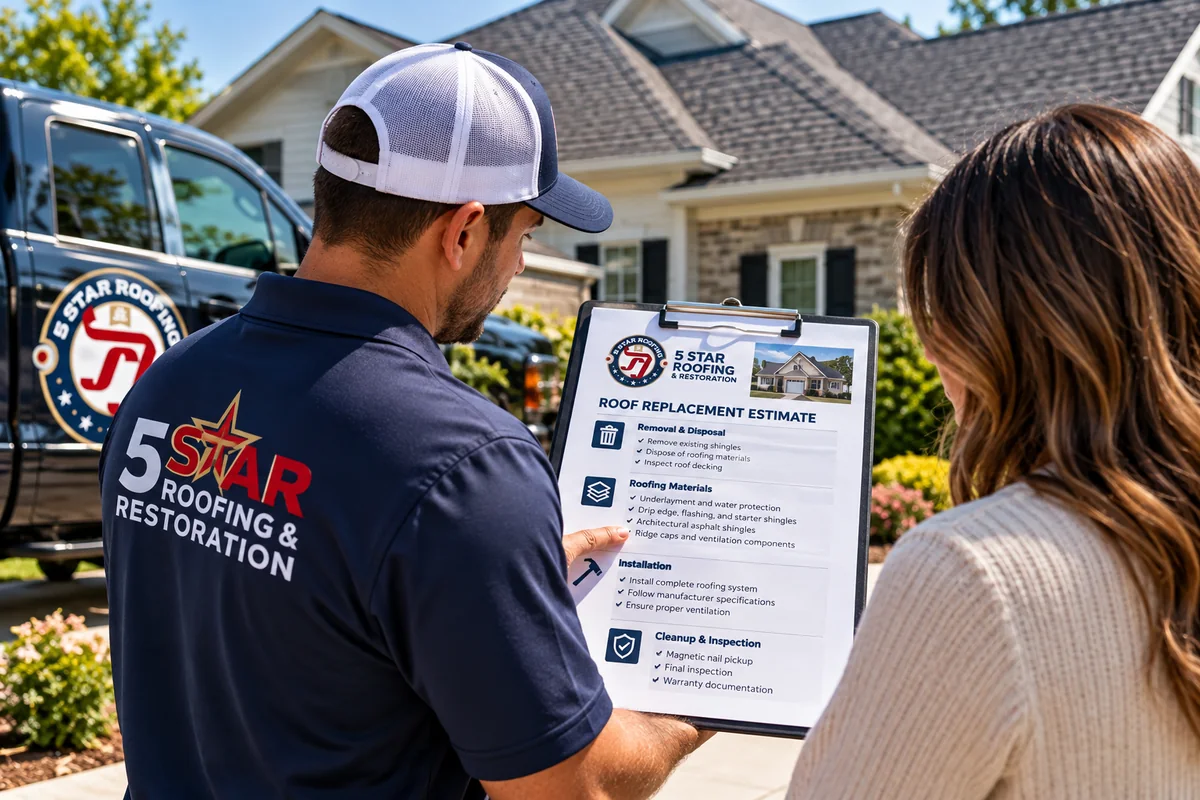
Contact us today for a free estimate, and let us show you why we're the preferred choice for homeowners and businesses alike. We're a family-owned local roofing company.
Top Roof Repair & Replacement Greensboro
Whether you're in need of a roof repair, full shingle roof replacement in Greensboro, or a completely new roof in Greensboro NC, our expert team is ready to deliver high-quality results with unmatched professionalism.We also specialize in insurance roof replacement in Greensboro, helping homeowners navigate the claims process after storm or hail damage with ease. If you've experienced wind or storm damage and need roof repair in Greensboro, we’re here to respond quickly and protect your home from further harm.Our services extend beyond traditional repairs to include metal roofing, commercial roofing, and complete residential roofing solutions — ensuring we have the right system for every customer and every roof type.

Metal Roofing
We specialize in installing GAF Timbersteel metal roofs: a stylish and energy efficient choice.

Roof Repair
We repair roof damage and roof leaks, execute roof replacements, and ensure that every square foot of your roof is in top condition.

Roof Replacement
Roof replacement is crucial not just for structural integrity but for a home's overall value.

Roof Inspection
We review both the interior and exterior components of the roof to identify potential issues.

Roof Rejuvenation
We methodically clean all roof types to improve curb appeal and avoid potential issues with this valuable preventative maintenance.

New Roof Installation
We take pride in installing cutting edge, long-lasting, and energy efficient roofs.