
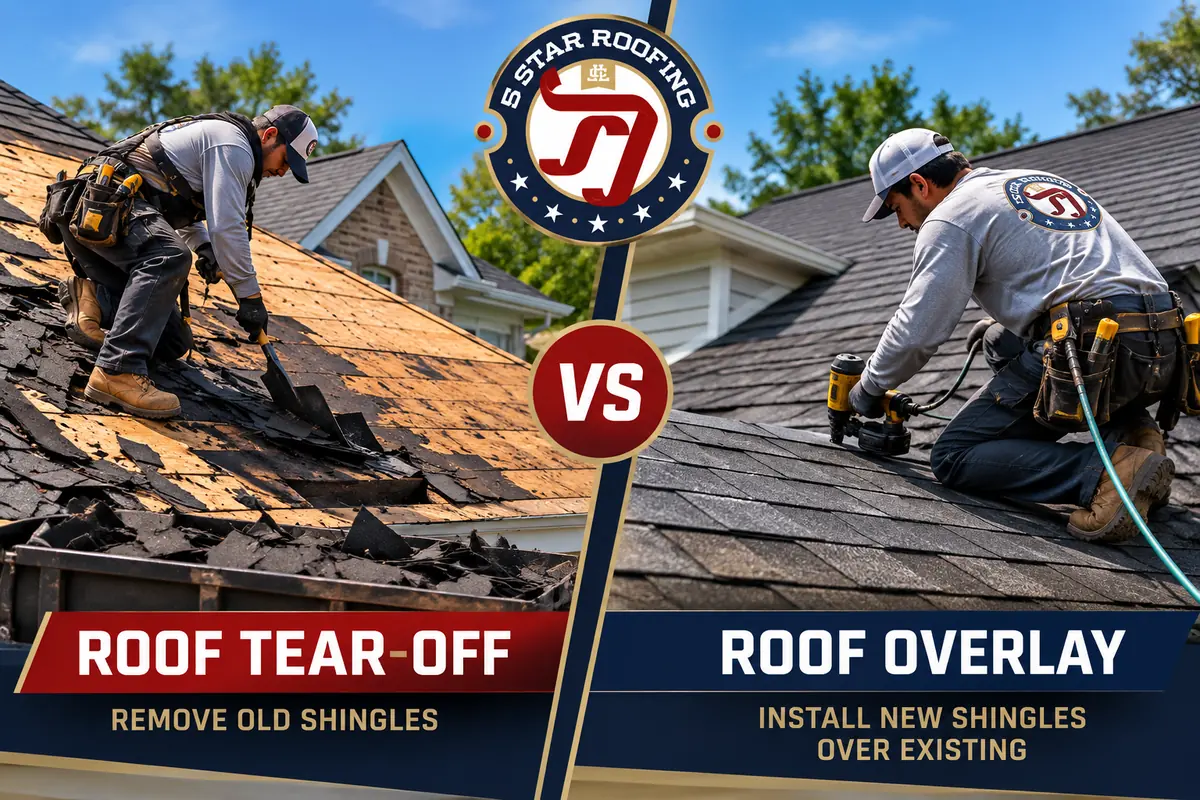
Roof Tear-Off vs. Roof Overlay: Which Is Better for Your Home?
When it's time for a new roof, you might hear two very different recommendations: remove the existing shingles and install a completely new roofing system, or install another layer of shingles over the existing roof.
The first option is called a roof tear-off. The second is commonly called a roof overlay or roof-over.
At first glance, an overlay may sound appealing because it avoids removing the old shingles. But the lower initial cost can come with important trade-offs involving roof decking, added weight, installation quality, and warranty eligibility.
For most homeowners planning a long-term asphalt-shingle roof replacement, a complete tear-off is generally the stronger option because it allows the underlying roof deck to be inspected and the new roofing system to be installed on a properly prepared surface.
That doesn't mean every overlay is automatically prohibited or unsuitable. The correct decision depends on the existing roof, the selected materials, manufacturer requirements, applicable building rules, and the property's condition.
For homeowners in Greensboro, Winston-Salem, High Point, and nearby communities, our Piedmont Triad roofing services include inspections and replacement options tailored to the condition of each home.
What Is a Roof Tear-Off?
A roof tear-off involves removing the existing roof covering before installing a replacement roofing system.
For a typical asphalt-shingle roof, the process includes:
- Protecting the property and establishing safe work areas.
- Removing existing shingles and applicable roofing materials.
- Inspecting the exposed roof decking.
- Replacing damaged or unsuitable decking where necessary.
- Installing the specified underlayment and water-protection components.
- Installing flashing, starter shingles, field shingles, and ridge caps.
- Completing ventilation details.
- Cleaning up and inspecting the finished installation.
Removing the existing roofing materials allows the contractor to see conditions that may have been concealed beneath the old shingles.
That opportunity to inspect the roof deck is one of the most important advantages of a tear-off.
What Is a Roof Overlay?
A roof overlay involves installing a new roof covering over an existing roof covering without completely removing the old one.
For asphalt shingles, this is sometimes called installing a second layer of shingles.
The existing roof remains underneath the new materials.
An overlay may reduce some removal and disposal work, but it also leaves much of the existing roofing assembly concealed.
Can You Install New Shingles Over Old Shingles?
Sometimes, but only when the existing roof, applicable code requirements, selected products, and manufacturer installation instructions permit it.
Important considerations include:
- The number of existing roofing layers.
- The condition of the current shingles.
- Whether the existing surface is sufficiently flat and suitable.
- The roof deck's condition.
- The roof's structural capacity.
- Existing leaks or moisture problems.
- Flashing and roof-edge details.
- Product warranty requirements.
- Local permitting and inspection requirements.
A roof overlay should never be assumed acceptable simply because the existing roof has only one layer of shingles.
A professional assessment is necessary before recommending this approach.
Roof Tear-Off vs. Roof Overlay: Key Differences
FactorComplete tear-offRoof overlayExisting shinglesRemovedUsually remainRoof deck inspectionDeck can be exposed and evaluatedMuch of deck remains concealedInitial laborTypically more removal workMay involve less removal workDisposalMore existing material to dispose ofLess initial tear-off wasteAdded roof weightOld covering removedAdditional covering adds weightSurface preparationNew installation begins after removal and deck preparationDepends on condition of existing coveringConcealed damageEasier to identify and addressMay remain hiddenWarranty eligibilityDepends on selected system and installationMay be restricted by manufacturer requirementsFuture replacementOne roof covering to removeMultiple layers may need removal later
The best choice isn't determined by installation speed or upfront price alone.
A contractor should explain the consequences of each option for your specific home.
Why Is a Complete Roof Tear-Off Often Recommended?
There are several reasons homeowners and roofing contractors may prefer removing the existing shingles before installing a new roof.
1. It Allows the Roof Deck to Be Inspected
The roof deck supports the roofing system and provides the surface to which roofing materials are attached.
Common residential decking materials include plywood and oriented strand board.
Once the old shingles and underlayment are removed, the contractor can check for visible problems such as:
- Water-damaged decking.
- Deteriorated wood.
- Loose or unsuitable panels.
- Damage near roof penetrations.
- Previous installation defects.
- Conditions that may interfere with fastening or installation.
With an overlay, much of this underlying material remains concealed.
A roof can look acceptable from the outside while still having problems beneath its surface.
2. It Provides an Opportunity to Correct Existing Problems
An older roofing system may contain issues that are difficult to address when another layer is installed over it.
Examples include:
- Improper flashing details.
- Deteriorated roof-edge components.
- Damaged underlayment.
- Poorly executed previous repairs.
- Inadequate preparation of roof penetrations.
A tear-off allows the contractor to evaluate these details and complete the specified corrective work before installing the replacement system.
3. It Avoids Adding Another Layer of Roofing Weight
Roofing materials contribute to the load carried by the structure.
An overlay adds the weight of another roof covering without removing the original shingles.
Whether the structure can accommodate additional weight depends on the existing roof assembly and structural conditions.
Homeowners should not assume that an extra layer is acceptable without appropriate evaluation.
4. It Can Support Better Installation Conditions
New roofing materials require a suitable installation surface.
An older roof may have curling shingles, uneven areas, or deteriorated components that make an overlay inappropriate.
A complete tear-off allows the contractor to prepare the deck and install the new roofing system according to the selected manufacturer's requirements.
5. It May Reduce Complications During Future Replacement
When multiple roofing layers exist, a future replacement may require removing all of them.
That can increase future tear-off labor and disposal requirements.
An overlay may reduce some work today while leaving additional removal work for a later project.
Are There Any Advantages to a Roof Overlay?
An overlay may have potential advantages under limited circumstances.
Lower Initial Removal Costs
Because the existing covering remains, some tear-off labor and disposal expenses may be avoided.
However, this does not guarantee that an overlay will be the better overall financial decision.
Less Initial Tear-Off Waste
Leaving the existing shingles in place reduces the amount of roofing material removed during the immediate project.
Those materials may still need to be removed during a future replacement.
Potentially Shorter Installation
An overlay may take less time when the existing roofing surface is suitable and all applicable requirements are satisfied.
But installation time depends on roof size, complexity, weather, materials, and necessary details.
The main question is not whether an overlay can be faster or cheaper. It's whether it is appropriate for the home's roofing system and long-term needs.
What Are the Biggest Risks of Installing Shingles Over Shingles?
A roof overlay can create problems when used on an unsuitable existing roof.
Concealed Moisture Damage
An overlay does not provide the same opportunity to expose and inspect the roof deck.
If deterioration or moisture-related damage exists underneath, it may remain unresolved.
Uneven Installation Surface
Curling, buckled, or irregular existing shingles can interfere with installation.
New roofing materials must be installed on a surface that meets the selected product's requirements.
Complicated Flashing Details
Roof penetrations and intersections require careful water-management details.
Adding another layer can complicate the treatment of certain edges, flashing, and transitions.
Additional Structural Load
A second roof covering increases the weight of the roofing assembly.
A qualified professional should evaluate whether the proposed work is appropriate for the structure.
Manufacturer Warranty Limitations
Some roofing manufacturers restrict or prohibit specific overlay installations.
A warranty should never be assumed to apply without reviewing the actual product requirements and warranty terms.
Is Roof Overlay Allowed in North Carolina?
Whether an overlay is permitted depends on the applicable building code, the existing roof assembly, the type of roofing material, and the proposed work.
Roof-covering rules commonly address situations involving multiple existing layers, unsuitable substrates, and other conditions that require removal.
However, homeowners should not rely on a universal statement that every second layer is legal or illegal throughout North Carolina.
Before approving an overlay, confirm:
- The applicable code requirements.
- The number and type of existing roofing layers.
- Whether removal is required because of existing conditions.
- Whether the selected roofing manufacturer permits the installation.
- Whether the roof structure is suitable.
- Any local permit or inspection requirements.
The contractor should explain the basis for recommending an overlay and identify any relevant restrictions.
Does a Roof Overlay Void Your Warranty?
Not necessarily every warranty, but an overlay can affect warranty eligibility.
Manufacturer warranties have specific installation requirements, limitations, and exclusions.
Some roofing systems or enhanced warranty programs may require removal of the existing covering or installation of designated components.
Before choosing an overlay, ask your contractor:
- Does the manufacturer allow this specific installation?
- Which warranties would apply?
- Are enhanced system warranties available?
- Are there exclusions related to existing roofing materials?
- Will the warranty be registered?
- Can I review the actual warranty documentation?
5 Star Roofing & Restoration is a GAF Master Elite® contractor and can explain eligible GAF roofing systems and available warranty options.
The appropriate warranty depends on the selected products, installation requirements, and current program terms.
Is a Roof Tear-Off More Expensive Than an Overlay?
A complete tear-off typically involves additional labor and disposal work because the existing roofing materials must be removed.
That can increase the upfront project cost.
However, a fair comparison should consider more than the initial invoice.
Costs to Compare
- Removal labor.
- Disposal fees.
- New roofing materials.
- Underlayment and water-protection components.
- Flashing work.
- Roof decking repairs.
- Ventilation work.
- Manufacturer requirements.
- Future maintenance.
- Potential future removal of multiple layers.
Example: Why the Cheapest Quote May Not Be the Best Value
Imagine two contractors provide estimates for the same house.
The first recommends installing shingles over the existing roof.
The second recommends removing the old shingles, inspecting the deck, and installing a complete replacement system.
The overlay proposal may have a lower upfront price because it excludes removal and disposal work.
But the proposals may not deliver the same scope, visibility into concealed conditions, or warranty eligibility.
Homeowners should compare the complete work descriptions before deciding.
For broader budgeting guidance, read our North Carolina roof replacement cost guide.
When Should You Avoid a Roof Overlay?
A complete tear-off is generally the more appropriate approach when the existing roof has significant problems.
Conditions that warrant particular concern include:
- Widespread shingle deterioration.
- Persistent or repeated leaks.
- Suspected roof decking damage.
- Curling or buckled shingles.
- Significant storm damage.
- Multiple existing roof-covering layers.
- Unsuitable flashing conditions.
- An uneven roofing surface.
- Manufacturer instructions requiring removal.
- Applicable code requirements requiring removal.
These conditions should be evaluated before any replacement method is selected.
An overlay is not a substitute for correcting an underlying roofing problem.
Roof Tear-Off vs. Roof Repair: What's the Difference?
Homeowners sometimes confuse a roof overlay with a roof repair.
These are different types of work.
Roof repair addresses specific problems in an existing roofing system.
Examples include replacing damaged shingles or correcting a localized flashing issue.
Roof overlay adds a new roof covering over an existing one.
Complete tear-off replacement removes the existing covering before installing the new roofing system.
If your roof has only localized damage and substantial remaining service life, a repair may be appropriate.
If deterioration is widespread, replacement may make more sense.
The right decision begins with an inspection and a clear explanation of the roof's condition.
How Does Piedmont Triad Weather Affect the Decision?
Homeowners throughout the Piedmont Triad experience seasonal weather that can affect roofing systems.
These conditions include:
- Summer heat and sun exposure.
- Thunderstorms.
- Heavy rainfall.
- Strong winds.
- Occasional hail.
- Winter freezing conditions.
When a roof has experienced repeated leaks or significant storm exposure, it's especially important to evaluate whether concealed damage may exist.
A complete tear-off allows the contractor to inspect the exposed deck and address identified problems before the replacement covering is installed.
That can be an important consideration for homes with an uncertain maintenance history or repeated moisture intrusion.
Roof Replacement Options in Greensboro, Winston-Salem, and High Point
The decision between a tear-off and an overlay should be based on the roof's actual condition, not simply the city where the property is located.
However, homeowners in each of our core service areas can benefit from a property-specific inspection.
Greensboro Roof Replacement
Greensboro includes older homes, established neighborhoods, and newer residential developments.
Roof age, previous repairs, storm exposure, and existing roof layers can influence the appropriate replacement method.
Our Greensboro roofing services include residential roof inspections, repairs, and replacement options.
Winston-Salem Roof Replacement
Winston-Salem homes may have older roofing systems, complex rooflines, or previous roofing work that warrants closer evaluation.
A tear-off may be particularly useful when the condition of the existing decking or flashing is uncertain.
Explore our Winston-Salem roofing services for information about local roofing needs.
High Point Roof Replacement
High Point homeowners considering a new roof should ask whether their current roofing materials can safely and appropriately remain in place.
An inspection can help identify visible deterioration, existing layers, and other conditions affecting the recommendation.
Learn about our High Point roofing services.
Surrounding Piedmont Triad Communities
Homeowners in Kernersville, Jamestown, Summerfield, Oak Ridge, and nearby communities should also confirm applicable local requirements before approving a roof overlay.
A reputable contractor should explain why the proposed method is appropriate for the specific property.
What Should You Ask a Contractor Before Choosing Tear-Off or Overlay?
Before signing a contract, ask:
- How many roofing layers are currently installed?
- What is the condition of the existing shingles?
- Are there signs of moisture damage?
- Can the roof deck be adequately evaluated?
- Does the selected manufacturer permit an overlay?
- Are there applicable code restrictions?
- How will flashing and roof-edge details be handled?
- What additional weight would the overlay add?
- What warranties would apply?
- What is included in each estimate?
- What happens if concealed damage is discovered?
- How could the decision affect future roof replacement costs?
Ask for a written explanation of the recommendation.
A contractor should be able to describe the trade-offs without relying on pressure or vague promises.
Frequently Asked Questions About Roof Tear-Off and Overlay
Is it better to tear off old shingles before installing new ones?
For many long-term asphalt-shingle replacement projects, a complete tear-off is preferable because it allows the roof deck to be inspected and the new roofing system to be installed on a properly prepared surface. The correct approach depends on the property's condition and applicable requirements.
Can you put a second layer of shingles on a roof?
Sometimes, if the existing roof is suitable and the installation complies with applicable building requirements and manufacturer instructions. A second layer should not be installed without an appropriate evaluation.
Is a roof overlay cheaper than a tear-off?
An overlay may have a lower initial cost because it avoids some removal and disposal work. However, the long-term value depends on the condition of the existing roof, warranty eligibility, and future maintenance or replacement needs.
Does a roof overlay last as long as a complete replacement?
There is no universal lifespan comparison. Performance depends on the products, existing roof conditions, installation quality, exposure, and maintenance. An unsuitable underlying roof can compromise the results of an overlay.
Can an overlay hide roof leaks?
An overlay may leave the underlying cause of a leak unresolved. A contractor should identify and address moisture problems rather than simply cover them with new shingles.
Can a roof overlay damage the structure?
Adding another roof covering increases structural load. Whether that load is acceptable depends on the roof assembly and structure. A qualified professional should evaluate the proposed work.
Will homeowners insurance pay for a tear-off?
Insurance coverage depends on the policy and cause of damage. Covered storm-related damage may qualify for certain repairs or replacement work, while ordinary deterioration generally does not. The insurer determines coverage under the policy.
Does a tear-off take longer than an overlay?
A tear-off generally involves additional removal and disposal work. However, total project duration depends on roof size, complexity, weather, repairs, and installation requirements.
Can I stay home during a complete roof tear-off?
In many cases, yes. Expect noise, vibration, and restricted access to outdoor work areas. Keep children and pets away from construction zones and follow the contractor's safety instructions.
Should I get estimates for both methods?
You can ask a contractor to explain whether both methods are appropriate. If an overlay is unsuitable or prohibited, a responsible contractor should explain why rather than provide it as an equivalent option.
Why Choose 5 Star Roofing & Restoration?
5 Star Roofing & Restoration helps homeowners throughout Greensboro, Winston-Salem, High Point, and surrounding Piedmont Triad communities evaluate their roofing needs.
As a GAF Master Elite® roofing contractor, our team provides:
- Residential roof inspections.
- Roof repair.
- Complete roof replacement.
- Asphalt-shingle roofing.
- Metal roofing options.
- Storm-damage assessments.
- Roofing system and warranty guidance.
- Financing information for qualified homeowners.
Our goal is to help homeowners understand their existing roofing system and choose a solution based on the property's condition, not simply the lowest initial price.
Schedule Your Roof Inspection in the Piedmont Triad
If you're deciding between a complete roof tear-off and installing new shingles over your existing roof, start with a professional inspection.
Understanding the condition of the shingles, decking, flashing, and other roofing components can help you avoid choosing a replacement method that doesn't address the real problem.
Call 5 Star Roofing & Restoration at (336) 780-7800 to discuss your roofing needs and request an inspection and estimate.
Our team serves Greensboro, Winston-Salem, High Point, and surrounding Piedmont Triad communities.
Disclaimer: Roof overlay eligibility depends on the existing roof, applicable building requirements, selected roofing materials, manufacturer instructions, and structural conditions. This article provides general educational information and does not replace a property-specific evaluation.
Fill out our quick contact form to get a free estimate from one of our Roofers

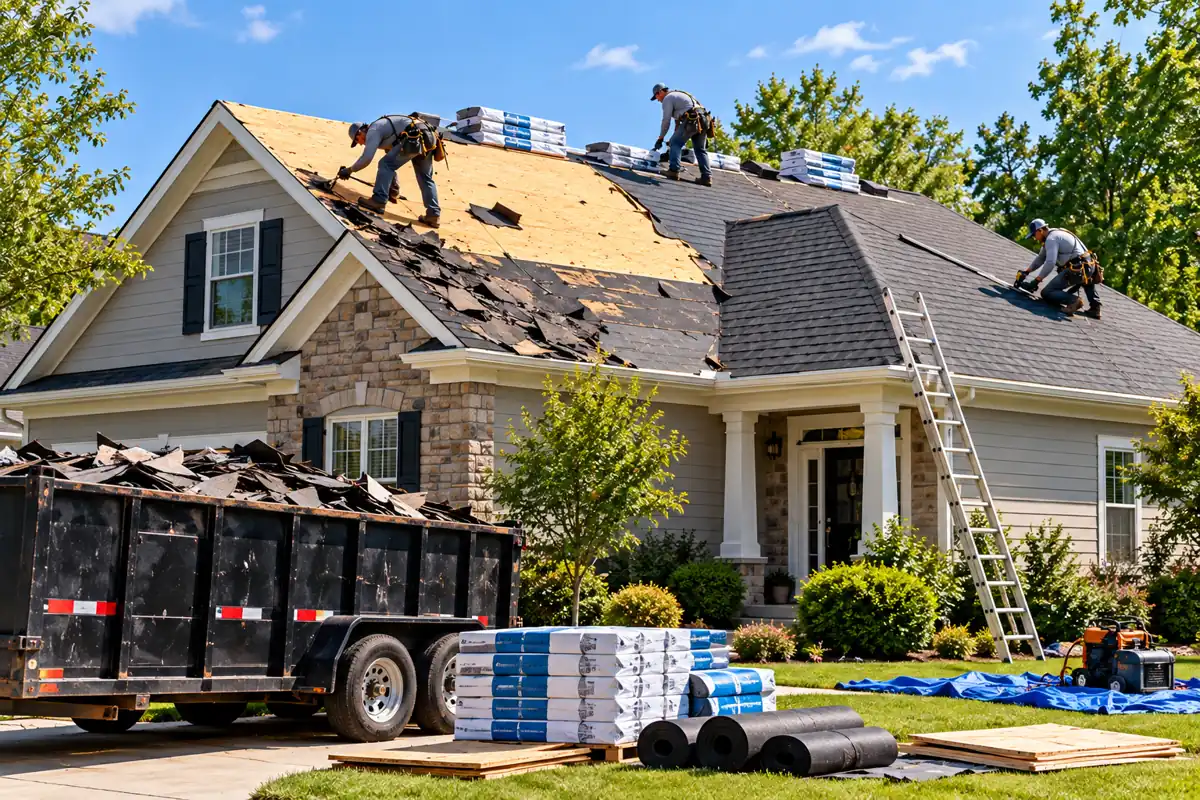
Contact us today for a free estimate, and let us show you why we're the preferred choice for homeowners and businesses alike. We're a family-owned local roofing company.
Top Roof Repair & Replacement Greensboro
Whether you're in need of a roof repair, full shingle roof replacement in Greensboro, or a completely new roof in Greensboro NC, our expert team is ready to deliver high-quality results with unmatched professionalism.We also specialize in insurance roof replacement in Greensboro, helping homeowners navigate the claims process after storm or hail damage with ease. If you've experienced wind or storm damage and need roof repair in Greensboro, we’re here to respond quickly and protect your home from further harm.Our services extend beyond traditional repairs to include metal roofing, commercial roofing, and complete residential roofing solutions — ensuring we have the right system for every customer and every roof type.

Metal Roofing
We specialize in installing GAF Timbersteel metal roofs: a stylish and energy efficient choice.

Roof Repair
We repair roof damage and roof leaks, execute roof replacements, and ensure that every square foot of your roof is in top condition.

Roof Replacement
Roof replacement is crucial not just for structural integrity but for a home's overall value.

Roof Inspection
We review both the interior and exterior components of the roof to identify potential issues.

Roof Rejuvenation
We methodically clean all roof types to improve curb appeal and avoid potential issues with this valuable preventative maintenance.

New Roof Installation
We take pride in installing cutting edge, long-lasting, and energy efficient roofs.