

Roof damage doesn't always mean you need a complete roof replacement. Many roofing problems, including missing shingles, damaged flashing, small leaks, and ventilation issues, can be addressed through targeted repairs when the surrounding roofing system remains in good condition.
The most common residential roof repairs include replacing damaged shingles, repairing flashing, sealing or replacing faulty roof penetrations, correcting leaks around chimneys and valleys, and addressing storm-related damage. The appropriate repair depends on the source of the problem, the condition of the existing roof, and whether the damage is isolated or widespread.
For homeowners in Greensboro, Winston-Salem, High Point, and surrounding North Carolina communities, understanding these problems can help prevent small roofing issues from developing into expensive interior water damage.
At 5 Star Roofing & Restoration, we help homeowners identify roofing problems and evaluate whether repair or replacement is the more practical solution.
What Are the Most Common Roof Repairs?
The seven most common types of residential roof repairs are:
- Missing, cracked, or wind-damaged shingles
- Roof leaks and water intrusion
- Damaged or deteriorated flashing
- Leaks around roof vents and pipe boots
- Chimney and roof valley problems
- Storm and hail damage
- Roof ventilation and moisture-related problems
Some repairs are straightforward, while others require a more comprehensive evaluation of the roofing system.
1. Replacing Missing or Damaged Roof Shingles
Asphalt shingles are among the most widely used residential roofing materials in North Carolina.
Although they are designed to withstand normal weather exposure, shingles can become damaged by strong winds, hail, falling branches, aging, or installation problems.
What are the signs of shingle damage?
Common warning signs include:
- Missing shingles or exposed roof underlayment
- Cracked, torn, or displaced shingles
- Lifted or unsealed shingle edges
- Significant granule loss accompanied by visible deterioration
- Water stains appearing after heavy rain
Can damaged shingles be repaired?
Yes. When damage is limited to a small area and the surrounding roof remains serviceable, individual shingles or affected sections can often be replaced.
However, repairs may be more complicated when the shingles have become brittle or matching replacement materials are unavailable.
Widespread shingle deterioration may indicate that replacement is more appropriate than continued patching.
2. Repairing Roof Leaks and Water Intrusion
Roof leaks are among the most common reasons homeowners request roofing inspections.
Water may enter through damaged shingles, deteriorated flashing, roof penetrations, valleys, or other vulnerable areas.
Importantly, the location of an interior water stain does not always identify the exact point where water enters the roof.
Water can travel along framing, decking, and other building materials before becoming visible inside the home.
Signs of a possible roof leak
- Water stains on ceilings or walls
- Damp attic insulation
- Moisture around chimneys or roof vents
- Peeling interior paint
- Visible dripping during rainfall
- Musty odors associated with moisture intrusion
How are roof leaks repaired?
The appropriate repair depends on the source.
A roofing contractor may need to replace damaged shingles, repair flashing, correct improperly installed components, or address deteriorated sealants.
Simply applying caulk over a suspected leak may provide temporary relief without correcting the underlying problem.
Homeowners should arrange an inspection when leaks persist or return after previous repairs.
3. Repairing Damaged Roof Flashing
Flashing is an essential component of a residential roofing system.
It helps direct water away from vulnerable intersections, including chimneys, walls, valleys, and roof penetrations.
Flashing problems can cause leaks even when the surrounding shingles appear to be in good condition.
What causes flashing damage?
Common causes include:
- Improper installation
- Corrosion or deterioration
- Movement between roofing components
- Storm-related damage
- Aging sealants
- Missing or incorrectly positioned flashing sections
Can flashing be repaired without replacing the roof?
Often, yes.
Depending on the condition of the roofing system, a contractor may be able to repair or replace the affected flashing while preserving much of the existing roof.
However, the work may require removing surrounding shingles or other roofing materials to install the flashing correctly.
A durable repair should address water drainage and installation details rather than relying exclusively on surface sealant.
4. Fixing Roof Vent and Pipe Boot Leaks
Plumbing vent pipes and roof ventilation components create openings through the roofing system.
These openings require properly installed flashing and weather-resistant seals.
Over time, rubber pipe boot collars may crack or deteriorate, creating opportunities for water intrusion.
Signs of a damaged pipe boot
- Water stains near a plumbing vent
- Cracked or deteriorated rubber collars
- Loose or displaced vent flashing
- Moisture visible around attic penetrations
What is the typical repair?
Depending on the condition of the component, the contractor may replace the pipe boot, flashing assembly, or other affected materials.
A properly completed repair should restore the roof's ability to shed water around the penetration.
Homeowners should avoid attempting repairs on steep or wet roofing surfaces because of the risk of serious falls.
5. Repairing Chimney Flashing and Roof Valleys
Chimneys and roof valleys are especially important areas because they involve changes in roof geometry or concentrated water flow.
Chimney flashing problems
Chimney leaks may originate from damaged step flashing, counterflashing, masonry deterioration, or other defects.
A roofing contractor may need to coordinate with a masonry professional when the chimney structure itself requires repair.
Roof valley problems
Roof valleys collect water from adjoining roof slopes.
Damaged valley materials, improper installation, accumulated debris, or deteriorated surrounding shingles can contribute to leaks.
Because valleys handle substantial water flow during heavy rain, repairs should follow the roofing system manufacturer's installation requirements.
6. Repairing Storm and Hail Damage
North Carolina homeowners experience seasonal thunderstorms that can produce damaging winds, hail, heavy rain, and falling debris.
Storm damage may affect shingles, flashing, gutters, roof vents, and other exterior components.
What does wind damage look like?
High winds can lift, crease, tear, or displace shingles.
Damage may be concentrated around roof edges, ridges, and other exposed areas.
What does hail damage look like?
Hail damage varies according to hailstone size, impact energy, roofing material, and roof condition.
Potential signs include bruising, fractures, or localized loss of protective granules on asphalt shingles.
However, not every dark spot or area of granule loss is evidence of hail damage.
A qualified inspection can help distinguish storm-related damage from ordinary aging, manufacturing characteristics, and other conditions.
Should you file an insurance claim?
Homeowners should review their insurance policy and document suspected storm damage.
A roofing contractor can assess and document observed roof conditions, but the insurer determines coverage under the applicable policy.
For Greensboro homeowners, our guide to what to look for when hiring a roofing contractor explains important questions to ask before authorizing repairs.
7. Correcting Roof Ventilation and Moisture Problems
Not every roofing problem begins on the outside of the home.
Poorly managed attic moisture, air leakage, insulation deficiencies, and inadequate ventilation can contribute to roofing-system deterioration.
What are signs of attic moisture problems?
Potential warning signs include:
- Condensation on attic surfaces
- Damp insulation
- Mold-like growth requiring professional evaluation
- Deteriorating roof decking
- Excessive attic heat or moisture accumulation
How are ventilation problems corrected?
The appropriate solution depends on the home's construction.
A professional evaluation may include reviewing intake and exhaust ventilation, insulation, air sealing, and moisture sources.
Adding roof vents without considering the overall system may not solve the problem and can sometimes create new performance issues.
How Much Do Common Roof Repairs Cost in North Carolina?
Roof repair pricing varies considerably according to the type of damage, materials, accessibility, roof slope, and amount of work required.
Repair typeMain cost factorsShingle replacementNumber of shingles, accessibility, material availabilityLeak repairTime required to locate the source and complete repairsFlashing repairLocation, material, and surrounding roofing removalPipe boot replacementVent type, roof slope, and installation requirementsChimney flashingComplexity, masonry condition, and flashing designStorm damage repairExtent of damage and affected roofing componentsVentilation correctionAttic configuration and necessary system changes
A small repair may be considerably less expensive than a full roof replacement, but homeowners should avoid relying on generic price estimates without a property-specific inspection.
A written estimate should describe the recommended work, materials, and any conditions that could change the final cost.
When Should You Repair a Roof Instead of Replacing It?
A roof repair may be appropriate when:
- Damage is isolated to a limited area.
- The surrounding shingles remain serviceable.
- The roof has substantial useful life remaining.
- Compatible replacement materials are available.
- The underlying decking and roofing components are in acceptable condition.
Replacement may be more practical when:
- Shingles are deteriorating across multiple roof sections.
- Leaks recur in different areas.
- Significant decking deterioration is present.
- The roofing system is approaching the end of its useful service life.
- Repeated repairs no longer offer reasonable long-term value.
The decision should be based on actual roof condition, not simply its age.
Our roofing services in Greensboro include inspections that help homeowners understand whether repairs or replacement are appropriate.
How Can Homeowners Prevent Common Roofing Problems?
Routine maintenance can help identify potential problems before they become more expensive.
Keep gutters and drainage areas clear
Leaves and debris can interfere with drainage and contribute to moisture problems.
Inspect the roof visually after storms
Look for missing shingles, fallen branches, displaced components, or other visible damage from the ground.
Do not climb onto a damaged roof.
Address interior water stains promptly
Water stains may indicate an active or previous leak.
Early investigation can help prevent further damage to insulation, drywall, and structural materials.
Maintain trees near the home
Overhanging branches can rub against roofing materials or fall during storms.
Schedule inspections when warning signs appear
A professional inspection can help identify damaged flashing, deteriorated shingles, and other problems that may not be visible from the ground.
Common Roof Repair Problems in Greensboro, Winston-Salem, and High Point
Homes throughout the Piedmont Triad experience many of the same roofing challenges, including thunderstorms, seasonal temperature changes, humidity, and heavy rainfall.
However, roof condition varies significantly by property.
A home surrounded by mature trees may experience more debris accumulation and shaded moisture conditions than a home with extensive sun exposure.
Older roofing systems may also require different repair approaches than recently installed roofs.
For homeowners in Greensboro, Winston-Salem, and High Point, the most effective approach is to identify the actual source of damage before deciding on a repair method.
Frequently Asked Questions About Roof Repairs
What is the most common roof repair?
Replacing damaged shingles and correcting leaks around flashing or roof penetrations are common residential roof repairs. The most frequent issue varies by roofing material, age, and weather exposure.
Can you repair a roof without replacing it?
Yes. Many isolated roofing problems can be repaired without replacing the entire roof, provided the surrounding roofing system remains in suitable condition.
How do I know if my roof leak is serious?
Recurring leaks, visible dripping, wet insulation, sagging surfaces, or signs of extensive moisture damage deserve prompt professional evaluation. Water near electrical fixtures requires particular caution.
How long does a roof repair take?
Some straightforward repairs can be completed within several hours. More complicated repairs may require additional time, materials, or specialized work.
Is it worth repairing a 20-year-old roof?
Possibly. The decision depends on the roofing material, overall condition, extent of damage, and expected remaining service life. A 20-year-old roof is not automatically beyond repair.
Does homeowners insurance cover roof repairs?
Homeowners insurance may cover damage caused by covered events, such as certain wind or hail losses. Normal wear, aging, and maintenance-related problems are generally treated differently. Coverage depends on the policy.
Can roof flashing be repaired?
Yes. Damaged flashing can often be repaired or replaced without a complete roof replacement, although surrounding roofing materials may need to be removed.
Should I repair my roof myself?
Roof work involves fall hazards and can create additional damage when performed incorrectly. Professional evaluation and repair are generally safer, particularly on steep, high, or storm-damaged roofs.
Schedule a Free Roof Inspection With 5 Star Roofing & Restoration
Small roofing problems can become expensive when water intrusion or deterioration goes unnoticed.
At 5 Star Roofing & Restoration, we help homeowners throughout Greensboro, Winston-Salem, High Point, and surrounding Central North Carolina communities identify roofing problems and evaluate practical repair solutions.
Whether you're dealing with missing shingles, damaged flashing, roof leaks, or storm damage, our team can inspect the condition of your roof and explain the available options.
Call 336-780-7800 to schedule a free roof inspection or request an estimate.
Visit 5 Star Roofing & Restoration to learn more about our roofing services.
Fill out our quick contact form to get a free estimate from one of our Roofers

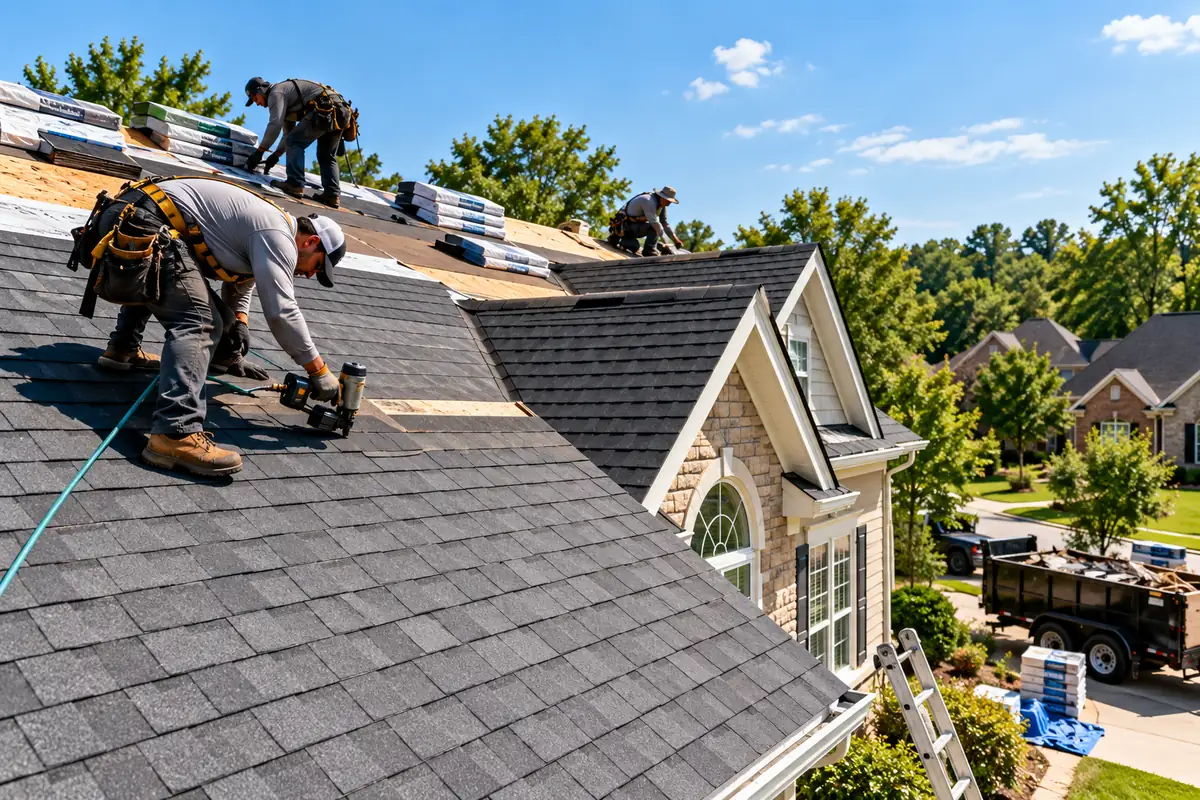
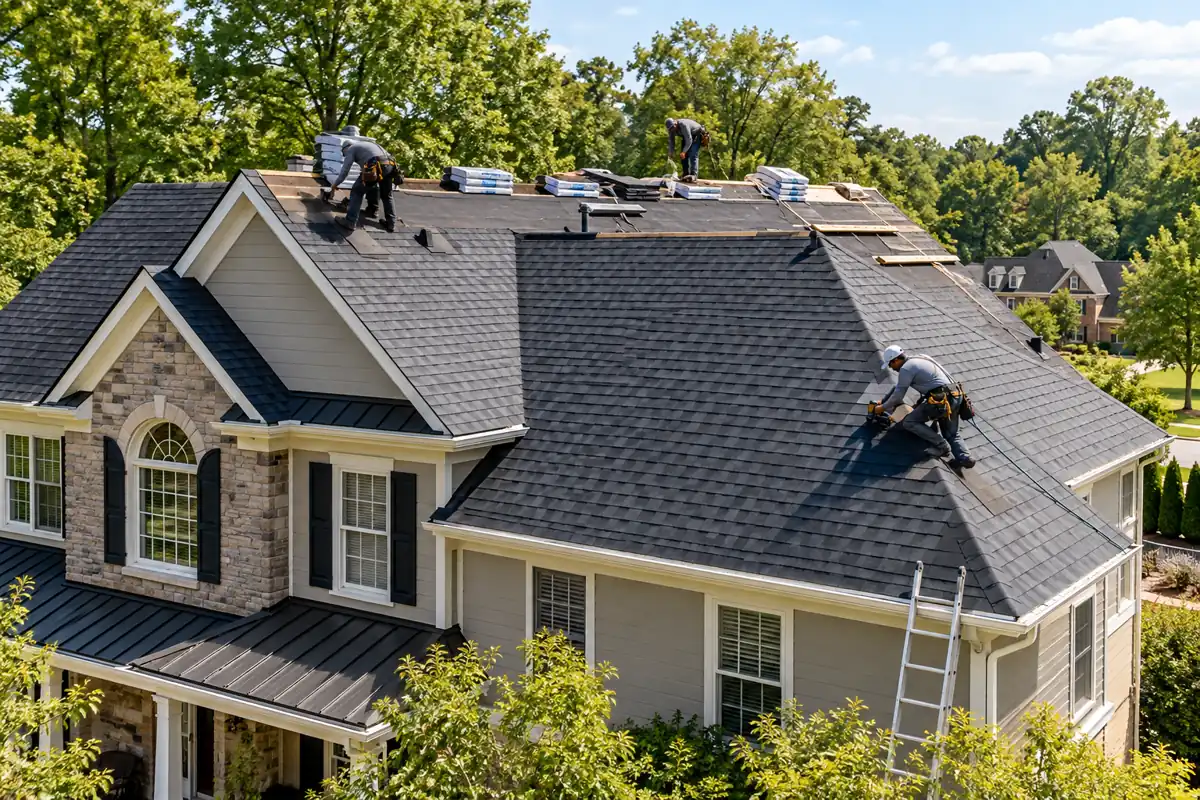
Contact us today for a free estimate, and let us show you why we're the preferred choice for homeowners and businesses alike. We're a family-owned local roofing company.
Top Roof Repair & Replacement Greensboro
Whether you're in need of a roof repair, full shingle roof replacement in Greensboro, or a completely new roof in Greensboro NC, our expert team is ready to deliver high-quality results with unmatched professionalism.We also specialize in insurance roof replacement in Greensboro, helping homeowners navigate the claims process after storm or hail damage with ease. If you've experienced wind or storm damage and need roof repair in Greensboro, we’re here to respond quickly and protect your home from further harm.Our services extend beyond traditional repairs to include metal roofing, commercial roofing, and complete residential roofing solutions — ensuring we have the right system for every customer and every roof type.

Metal Roofing
We specialize in installing GAF Timbersteel metal roofs: a stylish and energy efficient choice.

Roof Repair
We repair roof damage and roof leaks, execute roof replacements, and ensure that every square foot of your roof is in top condition.

Roof Replacement
Roof replacement is crucial not just for structural integrity but for a home's overall value.

Roof Inspection
We review both the interior and exterior components of the roof to identify potential issues.

Roof Rejuvenation
We methodically clean all roof types to improve curb appeal and avoid potential issues with this valuable preventative maintenance.

New Roof Installation
We take pride in installing cutting edge, long-lasting, and energy efficient roofs.