

Roof Decking Replacement: When Is New Plywood or OSB Necessary?
When homeowners think about replacing a roof, they usually picture new shingles. But underneath those shingles is an equally important component: the roof decking.
Also called roof sheathing, decking provides the surface that supports the roofing materials and connects them to the roof's structural framing. If that surface is damaged, deteriorated, or unsuitable for installation, putting new shingles over it may not solve the underlying problem.
Roof decking needs to be replaced when it can no longer provide a sound, suitable surface for the roofing system. Common reasons include moisture damage, rot, delamination, structural deterioration, and inadequate fastening support.
The good news is that finding damaged decking doesn't always mean replacing every sheet on the roof. Many homes only require localized repairs.
For homeowners throughout Greensboro, Winston-Salem, High Point, and surrounding communities, 5 Star Roofing & Restoration provides Piedmont Triad roofing services, including inspections and roof replacement evaluations.
This guide explains when roof decking should be replaced, how plywood compares with oriented strand board (OSB), what affects replacement costs, and what to expect if your roofing contractor discovers damage.
What Is Roof Decking?
Roof decking is the layer of material installed over a roof's structural framing, typically rafters or trusses.
It creates a continuous surface for attaching roofing system components.
On many modern residential roofs, the decking consists of wood-based panels such as plywood or OSB.
A typical asphalt-shingle roofing assembly includes:
- Structural roof framing.
- Roof decking or sheathing.
- Underlayment and specified water-protection materials.
- Flashing and roof-edge components.
- Asphalt shingles and associated roofing system materials.
Each component serves a different purpose.
The shingles form the primary weather-resistant covering, while the decking provides structural support and a suitable attachment surface.
Is Roof Decking the Same as Roof Framing?
No.
Roof framing consists of structural members such as rafters or trusses.
Decking is attached to those members.
Replacing damaged decking is different from repairing structural framing. Significant framing damage may require additional professional evaluation and specialized repairs.
When Does Roof Decking Need to Be Replaced?
Roof decking replacement is generally necessary when the existing material is damaged or unsuitable for the intended roofing installation.
Common reasons include:
- Rot or advanced moisture deterioration.
- Delaminated plywood.
- Swollen or weakened OSB.
- Significant physical damage.
- Unsuitable fastening support.
- Excessive deterioration around penetrations.
- Inadequate or incompatible existing sheathing.
- Structural or installation requirements that call for replacement.
Not every stain, discoloration, or cosmetic imperfection means a decking panel must be removed.
A contractor should evaluate the material's condition and explain why replacement is recommended.
7 Signs Your Roof Decking May Be Damaged
Some decking problems can be identified during an attic inspection. Others become visible only after the old roofing materials are removed.
1. Soft or Deteriorated Wood
Wood that has lost its integrity because of moisture or decay may no longer provide adequate support.
A roofing contractor may identify soft or deteriorated areas during inspection.
Homeowners should not walk on a roof to test for soft spots.
2. Visible Roof Sagging
A sagging roof section may indicate problems with decking, structural framing, or other components.
Because structural issues can be serious, visible sagging warrants professional assessment.
It should not automatically be attributed to decking alone.
3. Water Stains in the Attic
Water stains on the underside of roof decking can indicate previous or ongoing moisture intrusion.
Possible sources include:
- Roof leaks.
- Damaged flashing.
- Condensation.
- Ventilation-related moisture problems.
- Leaks around roof penetrations.
A stain does not necessarily mean the decking requires replacement, but it should be investigated.
4. Swollen or Delaminated Panels
Prolonged moisture exposure can cause wood-based panels to swell or deteriorate.
Plywood may develop separation between layers, while OSB can experience swelling and loss of integrity.
The extent of damage determines whether replacement is needed.
5. Repeated Roof Leaks
Recurring leaks can expose the same area of decking to moisture over time.
Even if the visible leak is eventually repaired, concealed deterioration may remain.
The affected area should be evaluated during roof replacement.
6. Damaged Decking Around Chimneys or Vents
Roof penetrations and intersections are important water-management areas.
Failed flashing or previous installation problems may allow water to affect nearby decking.
These locations deserve careful inspection during replacement.
7. Fasteners That Cannot Hold Properly
Roofing materials require an appropriate fastening surface.
If existing decking is too deteriorated or otherwise unsuitable to provide the required fastening support, corrective work may be necessary.
The contractor should follow the selected roofing system's installation requirements.
Plywood vs. OSB: What's the Difference?
Plywood and oriented strand board are two common materials used for residential roof decking.
Both can be suitable when properly specified and installed.
However, they differ in manufacturing, moisture response, and other characteristics.
What Is Plywood Roof Decking?
Plywood is an engineered wood panel made from thin layers of wood veneer bonded together.
The layers are arranged with alternating grain directions to provide strength and dimensional stability.
Potential advantages include:
- Established use in residential construction.
- Strong performance when appropriately specified.
- Different grades and thicknesses.
- Familiar installation methods.
- Moisture-response characteristics that may be preferable in certain applications.
However, plywood can still deteriorate when exposed to prolonged moisture.
What Is OSB Roof Decking?
OSB stands for oriented strand board.
It is manufactured from wood strands arranged in layers and bonded using adhesives and pressure.
Potential advantages include:
- Wide availability.
- Consistent manufactured panel dimensions.
- Structural performance when properly rated and installed.
- Often competitive material pricing.
- Common use in residential roof construction.
OSB is not automatically an inferior roofing material.
Its suitability depends on the panel rating, thickness, framing support, exposure conditions, and installation.
Plywood vs. OSB Comparison
FactorPlywoodOSBConstructionBonded wood veneersBonded oriented wood strandsCommon roofing useYesYesStructural suitabilityDepends on rating and installationDepends on rating and installationMoisture exposureCan swell or delaminateCan swell, especially at edgesMaterial pricingOften higherOften lowerAvailabilityCommonCommonReplacement suitabilityDepends on project requirementsDepends on project requirements
Neither material should be selected based on price alone.
The correct panel must meet the project's structural, fastening, span, and installation requirements.
Is Plywood Better Than OSB for North Carolina Roofs?
Not necessarily.
Both plywood and OSB can be appropriate for homes in North Carolina when properly selected and installed.
The more important considerations include:
- Required panel thickness.
- Structural panel rating.
- Spacing of rafters or trusses.
- Roof design.
- Fastener requirements.
- Manufacturer specifications.
- Moisture management.
- Applicable building requirements.
North Carolina's humidity and rainfall make moisture protection important, but neither plywood nor OSB is intended to remain continuously exposed to water.
A properly installed roofing system, sound flashing, and appropriate moisture management matter more than choosing a material based on a simple assumption that one is always superior.
Should You Pay Extra for Plywood?
Possibly, if the product offers a meaningful advantage for your specific application.
Before paying more, ask:
- Why is plywood being recommended?
- What panel thickness and rating will be used?
- Is OSB also acceptable for this roof?
- Does the proposed material meet the roofing manufacturer's requirements?
- What is the total installed price difference?
A contractor should explain the recommendation in terms of the actual project.
Does All Roof Decking Need to Be Replaced During Roof Replacement?
No.
A complete roof replacement does not automatically require replacing all existing decking.
If the existing decking is sound, suitable, and compliant with applicable requirements, it may remain in place.
When Localized Replacement May Be Enough
Localized replacement may be appropriate when:
- Damage affects a limited area.
- Surrounding panels remain sound.
- The framing is suitable.
- Replacement panels can be properly supported and attached.
- The completed assembly meets applicable requirements.
When More Extensive Replacement May Be Necessary
A larger decking replacement may be recommended when:
- Deterioration is widespread.
- Numerous panels have lost integrity.
- Existing sheathing is unsuitable for the new roofing system.
- Structural or fastening requirements cannot otherwise be satisfied.
- Significant previous installation problems affect much of the roof.
The decision should be based on inspection findings rather than an automatic recommendation to replace every panel.
Can You Install New Shingles Over Damaged Roof Decking?
New shingles should not be installed over decking that is unsuitable for the roofing system.
The roof deck must provide an appropriate substrate for the selected roofing materials.
Installing new shingles over deteriorated or inadequately supported decking can create problems with fastening, installation, and long-term roof performance.
Why a Complete Tear-Off Can Help
A complete tear-off allows the contractor to expose and inspect the existing decking.
An overlay leaves much of the existing roofing assembly concealed.
That is one reason a complete tear-off is often preferred when there are concerns about underlying conditions.
Before choosing a replacement method, ask whether the existing roof needs to be removed to evaluate and correct concealed problems.
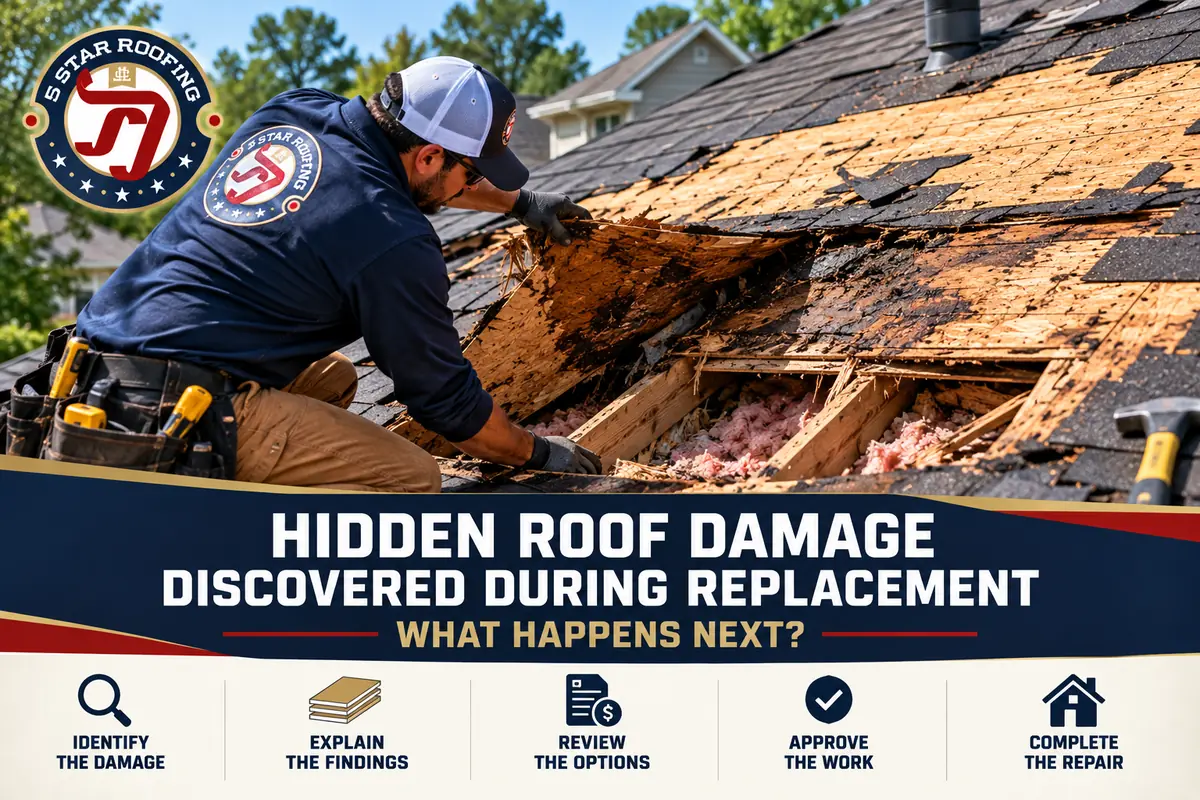
What Happens When Roofers Discover Rotten Decking?
Discovering damaged decking during replacement can be unexpected, but a clear process can help homeowners manage the situation.
Step 1: Identify the Affected Area
The roofing crew evaluates the exposed decking and identifies the location and apparent extent of deterioration.
Step 2: Document the Damage
Photographs and measurements help explain the findings.
Ask the contractor to identify which areas require replacement and why.
Step 3: Review the Repair Scope
The contractor should explain:
- Which panels need replacement.
- Whether adjacent materials require attention.
- What replacement material will be used.
- Whether the framing is suitable.
- Whether the work affects the installation schedule.
Step 4: Review Additional Costs
If decking replacement is not included in the original estimate, the contractor should explain the proposed charge.
A written change order can document the additional scope and price.
Step 5: Complete the Necessary Repairs
The crew removes unsuitable decking and installs replacement material according to applicable requirements.
Step 6: Continue the Roofing Installation
Once the decking is suitable, the roofing crew can proceed with underlayment, flashing, and the remaining roofing system.
For more about unexpected findings during construction, see our guide to hidden roof damage discovered during replacement.
How Much Does Roof Decking Replacement Cost?
Roof decking replacement costs depend on the amount of material required and the complexity of the work.
There is no single price that applies to every home.
Cost factors include:
- Number of damaged panels.
- Panel type and thickness.
- Roof pitch.
- Property accessibility.
- Labor requirements.
- Disposal.
- Structural conditions.
- Required fastening or support work.
- Whether replacement occurs during an existing roofing project.
Why Is Decking Replacement Often Less Disruptive During a Tear-Off?
During a complete roof replacement, the crew has already removed the existing roof covering.
This provides access to the decking without requiring a separate tear-off of finished roofing materials.
However, additional decking work can still increase labor, material costs, and project duration.
How Should Decking Costs Appear in a Roofing Estimate?
Some contractors include a defined amount of decking replacement.
Others establish unit pricing for additional work.
Ask your contractor to identify:
- Any included decking allowance.
- The unit of measurement used for additional decking.
- Material specifications.
- Labor and disposal charges.
- How additional work is approved.
Our guide on what a roof replacement estimate should include explains how to compare these provisions.
What Thickness Should Roof Decking Be?
The appropriate decking thickness depends on several factors.
These include:
- Framing spacing.
- Panel span rating.
- Structural requirements.
- Roofing material.
- Applicable building code.
- Manufacturer installation instructions.
- Existing roof construction.
There is no single thickness that should be recommended for every residential roof without evaluating the assembly.
A contractor should specify the material, thickness, and rating being proposed.
Can a Contractor Mix Plywood and OSB?
Different panel materials may be present on the same roof, particularly after previous repairs.
However, any replacement work must be compatible with the roof assembly and meet applicable structural and installation requirements.
Ask how the contractor will handle panel thickness, support, and fastening at transitions.
How Long Does Roof Decking Replacement Take?
A small amount of localized decking replacement may be completed during the normal roof installation schedule.
More extensive replacement may add time.
Factors affecting duration include:
- Number of panels.
- Extent of deterioration.
- Roof pitch.
- Framing condition.
- Material availability.
- Weather.
- Required inspections or structural repairs.
If the damage affects framing or requires specialized assessment, the delay may be longer.
Ask your contractor for an updated schedule if additional work is discovered.
Does Homeowners Insurance Cover Roof Decking Replacement?
Coverage depends on the insurance policy and the cause of damage.
If decking damage results from a covered event, some related repairs may be eligible under the policy.
However, ordinary wear, deterioration, and long-term moisture problems are generally not covered reasons for replacement.
Before assuming a claim will be paid:
- Review the policy.
- Document the condition.
- Identify the apparent cause.
- Contact the insurer when appropriate.
- Preserve relevant estimates and photographs.
The insurance company determines coverage under the policy.
A roofing contractor can document visible conditions and provide repair estimates but cannot guarantee insurance payment.
Roof Decking Replacement in Greensboro, Winston-Salem, and High Point
Roof decking problems can occur throughout the Piedmont Triad.
However, the need for replacement depends on the home's actual condition, not simply its location.
Greensboro Roof Decking Replacement
Greensboro includes older residential neighborhoods and newer developments.
Some homes may have experienced previous roof repairs, moisture intrusion, or aging roofing materials that warrant closer evaluation during replacement.
Our Greensboro roofing services include roof inspections and replacement evaluations for homeowners considering a new roof.
Winston-Salem Roof Decking Replacement
Winston-Salem homes range from older properties to modern residential construction.
Roof decking assessment may be particularly important when a home has experienced recurring leaks or has an uncertain roofing history.
Learn more about our Winston-Salem roofing services.
High Point Roof Decking Replacement
High Point homeowners may encounter decking concerns associated with storm damage, aging roofing materials, or previous water intrusion.
A complete tear-off can help reveal conditions that were not visible during the initial inspection.
Explore our High Point roofing services for local roof repair and replacement information.
Surrounding Piedmont Triad Communities
Homeowners in Kernersville, Jamestown, Summerfield, Oak Ridge, and surrounding communities should also discuss decking evaluation before approving a roof replacement.
The appropriate material and repair scope should be determined by the property.
How Can You Prevent Roof Decking Damage?
Not all decking deterioration can be prevented, but proactive maintenance may reduce the risk of moisture-related problems.
Address Roof Leaks Promptly
Water intrusion can affect materials beneath the shingles.
If you notice a leak, arrange an evaluation rather than allowing it to continue.
Maintain Roof Flashing
Flashing around chimneys, vents, skylights, and roof intersections helps manage water.
Damaged or deteriorated flashing should be evaluated.
Keep Drainage Systems Functional
Clogged gutters and drainage problems can contribute to water-management issues around the roof and exterior.
Regular maintenance can help reduce avoidable problems.
Evaluate Attic Moisture Conditions
Excessive moisture in attic spaces may contribute to deterioration.
The appropriate response depends on the source of moisture and the roof assembly.
Schedule Inspections When Warning Signs Appear
Consider a professional inspection when you notice:
- Ceiling stains.
- Persistent leaks.
- Visible roof damage.
- Sagging.
- Moisture in the attic.
- Missing shingles after a storm.
Early evaluation can help identify problems before they become more extensive.
Questions to Ask Before Approving Roof Decking Replacement
Before authorizing additional decking work, ask:
- Which areas are damaged?
- Can I see photographs?
- Why must the decking be replaced?
- Is the damage localized or widespread?
- Will plywood or OSB be used?
- What panel thickness and rating are specified?
- Is the surrounding framing sound?
- How is the additional work priced?
- Does the original estimate include any decking replacement?
- Will the work affect the project schedule?
- Is a written change order required?
- Will the completed work meet the selected roofing system's requirements?
Clear answers help homeowners understand the necessity, cost, and scope of the work.
Frequently Asked Questions About Roof Decking Replacement
How do I know if my roof decking is rotten?
Signs may include soft or deteriorated wood, moisture damage, sagging, or visible problems in accessible attic areas. However, some damage remains concealed until the roofing materials are removed.
Does all plywood need to be replaced when getting a new roof?
No. Sound and suitable decking may remain in place. Replacement is generally limited to damaged or inadequate areas unless broader conditions require more extensive work.
Is OSB acceptable for roof decking?
Yes. Appropriately rated and installed OSB is commonly used in residential roof construction. Suitability depends on the project's structural and installation requirements.
Is plywood stronger than OSB?
Both materials are engineered for structural applications, but performance depends on panel rating, thickness, span, and other specifications. A general statement that one is always stronger would be misleading.
Can rotten roof decking be repaired without replacing the entire roof?
Localized decking repairs may be possible, depending on the condition and access. The appropriate method must account for the surrounding roofing materials and structural requirements.
How much does it cost to replace rotten roof decking?
Costs vary based on material, labor, the amount of damage, access, and other project conditions. Request a written estimate or agreed unit pricing rather than relying on a universal price.
Can new shingles be installed over old plywood?
Yes, if the existing plywood is sound, suitable, and meets applicable installation requirements. Damaged or inadequate decking should be corrected before new roofing materials are installed.
Does roof decking replacement require a permit?
Requirements depend on the jurisdiction and scope of work. Structural repairs may involve different requirements than routine roof-covering replacement. Confirm responsibilities with the contractor and applicable local authority.
Will roof decking replacement delay my new roof?
Small localized repairs may fit within the normal schedule. Extensive deterioration or structural problems can require additional time.
Should I choose plywood or OSB for my roof replacement?
Both may be suitable. The correct choice depends on structural requirements, roofing materials, specifications, availability, and budget. Ask your contractor to explain the recommendation.
Why Choose 5 Star Roofing & Restoration?
5 Star Roofing & Restoration serves homeowners throughout Greensboro, Winston-Salem, High Point, and surrounding Piedmont Triad communities.
As a GAF Master Elite® roofing contractor, our team provides:
- Residential roof inspections.
- Roof repairs.
- Complete roof replacement.
- Asphalt-shingle roofing.
- Metal roofing options.
- Storm-damage assessments.
- Roofing system and warranty guidance.
- Financing information for qualified homeowners.
We understand that discovering damaged decking during a roof replacement can raise concerns about cost, scheduling, and the condition of your home.
Our goal is to help homeowners understand their roofing options and make informed decisions based on the actual condition of their roofing systems.
Schedule Your Roof Inspection in the Piedmont Triad
If your roof has experienced leaks, storm damage, or visible deterioration, an inspection can help identify potential problems before they become more extensive.
Although not every concealed decking problem can be detected before the old roof covering is removed, a professional assessment can help establish an appropriate replacement plan.
Call 5 Star Roofing & Restoration at (336) 780-7800 to discuss your roofing needs and request an inspection and estimate.
We serve homeowners throughout Greensboro, Winston-Salem, High Point, and surrounding Piedmont Triad communities.
Disclaimer: Roof decking replacement requirements, material specifications, project costs, insurance coverage, and installation timelines depend on the property's condition, applicable requirements, and written scope of work. This guide provides general educational information and does not replace a property-specific roofing or structural assessment.
Fill out our quick contact form to get a free estimate from one of our Roofers

Contact us today for a free estimate, and let us show you why we're the preferred choice for homeowners and businesses alike. We're a family-owned local roofing company.
Top Roof Repair & Replacement Greensboro
Whether you're in need of a roof repair, full shingle roof replacement in Greensboro, or a completely new roof in Greensboro NC, our expert team is ready to deliver high-quality results with unmatched professionalism.We also specialize in insurance roof replacement in Greensboro, helping homeowners navigate the claims process after storm or hail damage with ease. If you've experienced wind or storm damage and need roof repair in Greensboro, we’re here to respond quickly and protect your home from further harm.Our services extend beyond traditional repairs to include metal roofing, commercial roofing, and complete residential roofing solutions — ensuring we have the right system for every customer and every roof type.

Metal Roofing
We specialize in installing GAF Timbersteel metal roofs: a stylish and energy efficient choice.

Roof Repair
We repair roof damage and roof leaks, execute roof replacements, and ensure that every square foot of your roof is in top condition.

Roof Replacement
Roof replacement is crucial not just for structural integrity but for a home's overall value.

Roof Inspection
We review both the interior and exterior components of the roof to identify potential issues.

Roof Rejuvenation
We methodically clean all roof types to improve curb appeal and avoid potential issues with this valuable preventative maintenance.

New Roof Installation
We take pride in installing cutting edge, long-lasting, and energy efficient roofs.